
King Charles III's net worth in 2026 sits somewhere between £640 million and £1.8 billion, depending on which assets you count. The Sunday Times Rich List 2025 puts his personal fortune at £640 million. blank" rel="noopener noreferrer">The Guardian's more expansive audit, which includes Duchy of Lancaster assets, rare jewels, the royal stamp collection, racehorses, and investment holdings, arrives at a figure of at least £1.8 billion. Neither number is wrong, exactly. They're just measuring different things, and understanding that gap is the most useful thing you can take away from this article.
King Charles III Net Worth: Estimate, Breakdown, and Methods

Derek Mansfield
27 May 2026
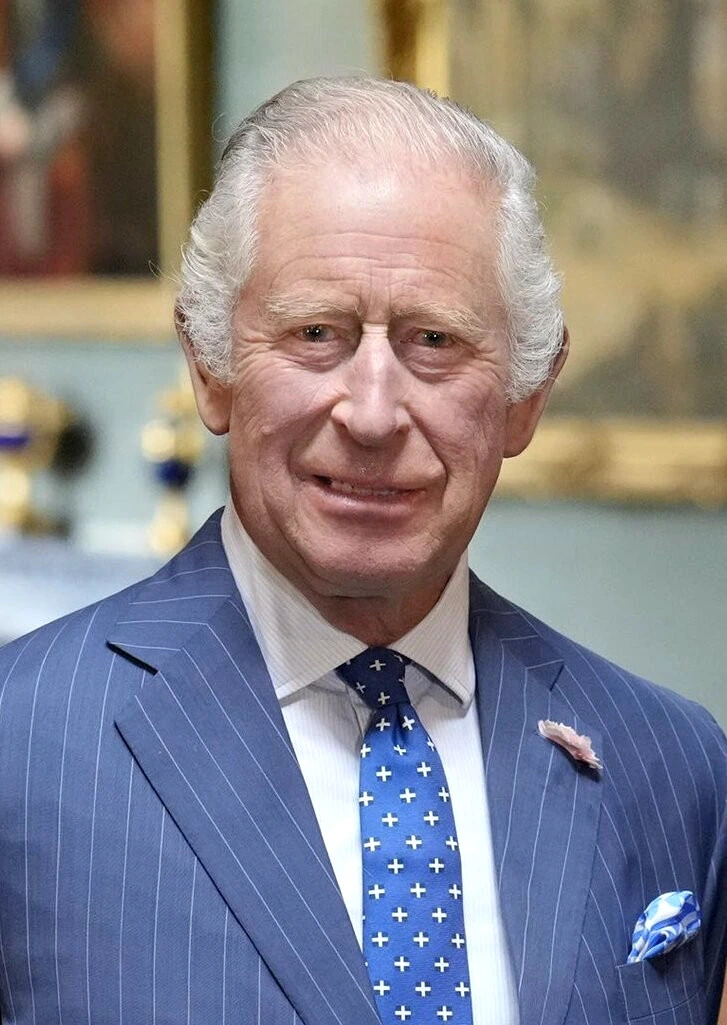
What's King Charles III's net worth in 2026?

The honest answer is that there's no single verified figure, because royal finances blend public funding, semi-private institutional income, and genuinely private wealth in ways that even the government's own briefings acknowledge are difficult to untangle. What we can say with confidence is that the credible range spans from roughly £640 million (the more conservative, personally-owned-assets view) to £1.8 billion (the broader monarch-wealth view). The categories the Guardian's audit used to reach the higher figure include: Duchy of Lancaster assets valued at around £653 million, jewels at £533 million, real estate at £330 million, shares and investments at £142 million, a stamp collection worth at least £100 million, racehorses at £27 million, artworks at £24 million, and cars at £6.3 million.
Charles was born on 14 November 1948 (full name Charles Philip Arthur George) and became King of the United Kingdom in September 2022 following the death of Queen Elizabeth II. That accession changed his financial picture significantly, shifting him from Duchy of Cornwall income as Prince of Wales to a completely different set of income streams as monarch. Keeping those two eras separate matters a lot when you're reading older estimates.
Where the money actually comes from
The Royal Family's own website describes the King's finances as coming from three distinct sources: the Sovereign Grant, the Privy Purse, and his personal wealth and income. Each one works differently, and conflating them is where a lot of confusion creeps into net worth discussions.
The Sovereign Grant

This is taxpayer-funded money, paid to the Royal Household in exchange for the King surrendering the Crown Estate's revenues to the government. For 2024/25, the Sovereign Grant was £86.3 million, which has remained flat for four consecutive years. For 2025/26, it rises to £132.1 million. It's important to note that this isn't personal income in the conventional sense. The Sovereign Grant pays for official duties, staff, and the maintenance of occupied royal palaces (including £34. The Royal Family's Financial reports media pack explains that the Sovereign Grant funds official duties and maintenance of occupied royal palaces, and it reports a total of £86.3 million for 2024, 25 for the fourth consecutive year. 5 million earmarked for the ongoing Buckingham Palace reservicing project). It doesn't go into Charles's personal pocket.
The Privy Purse and the Duchy of Lancaster
The Privy Purse is the King's personal income from the Duchy of Lancaster, a historic estate that generates a net surplus paid directly to the monarch. For 2024/25, that surplus came to £28.7 million. Unlike the Sovereign Grant, this is genuinely personal income that Charles can use at his own discretion, including to support the costs of other working royals who aren't covered by the Sovereign Grant. The Duchy of Lancaster's profits go to the Privy Purse for the King as Duke of Lancaster, a role that is separate from his constitutional position as monarch.
Personal wealth: investments, estates, and inherited assets

The third stream is the one that drives the really large numbers. This covers privately owned properties like Balmoral and Sandringham, private investment portfolios, inherited wealth, art and jewellery collections, racehorses, and the famous royal stamp collection (estimated at over £100 million on its own). This income and these assets are not publicly reported in any detail, which is exactly why different sources produce such wildly different totals. Analysts working on this category are making educated assumptions based on partial disclosures, auction records, property valuations, and historical inheritance patterns.
Why the estimates vary so much
The gap between £640 million and £1.8 billion isn't a sign that one source is wrong. It reflects genuine methodological differences in what gets counted.
| What's being measured | Sunday Times Rich List (£640m) | Guardian audit (£1.8bn+) |
|---|---|---|
| Personally owned real estate | Included | Included |
| Duchy of Lancaster asset base | Excluded | Included (£653m) |
| Private jewels and collections | Partial estimate | Full estimate (£533m jewels, £100m+ stamps) |
| Shares and investments | Included | Included (£142m) |
| Racehorses and artworks | Included | Included |
| Crown Estate / occupied palaces | Excluded | Excluded |
| Sovereign Grant funds | Excluded | Excluded |
The Sunday Times Rich List measures identifiable wealth in things like land, property, art, or significant shareholdings. It deliberately excludes assets the King holds in his constitutional capacity, such as the Crown Estate, occupied royal palaces, and the Royal Collection. The Guardian's investigation was broader, including the Duchy of Lancaster's full asset base and making assumptions about savings and investment behaviour. Both approaches have legitimate reasoning behind them. The House of Commons Library, for its part, explicitly notes that while the King owns certain things 'in right of the Crown,' he can't freely sell them or derive direct personal income from them. Whether to count those assets as part of his personal net worth is a judgment call, not a factual dispute.
The methodology question also applies to valuation. The jewellery estimate of £533 million, for example, requires someone to value pieces that rarely come to auction and were largely inherited. The stamp collection estimate of £100 million-plus is based on philatelic expertise rather than any sale. These aren't wild guesses, but they are estimates with meaningful uncertainty ranges built in.
Major assets and where the money gets spent
The properties are the most tangible part of the picture. Balmoral Castle in Scotland and Sandringham Estate in Norfolk are privately owned by the King and were inherited from Queen Elizabeth II. They're working estates that generate income from agriculture, tourism, and related activities, not just ceremonial homes. Occupied royal palaces like Buckingham Palace and Windsor Castle are technically owned by the Crown, not Charles personally, which is why they don't appear in his personal net worth in more conservative estimates.
On the spending side, running the monarchy is genuinely expensive. The Sovereign Grant covers staff salaries (the Royal Household employs hundreds of people), palace maintenance, official travel, and security for working royals on official duties. Security costs for the broader royal family and the logistics of state visits, overseas tours, and the coronation itself (in 2023) represent expenditures that are vast by any normal measure. But these come from the Sovereign Grant rather than Charles's personal funds, which is another important distinction when thinking about his actual financial position.
The car collection (valued at around £6.3 million) and the racehorse operation are genuine personal assets and expenditures. Charles has maintained an active interest in equestrian activities throughout his life, and the horses represent both a cultural tradition and a modest investment category.
How his income has changed over time
As Prince of Wales, Charles's primary income came from the Duchy of Cornwall, a separate historic estate that provides the heir to the throne with an annual income. He and his predecessors voluntarily paid income tax on that Duchy income at normal rates (a practice going back decades). That arrangement ended when he became King in September 2022. As monarch, the Duchy of Cornwall passed to his son Prince William (now Prince of Wales), and Charles's income shifted to the Sovereign Grant and the Duchy of Lancaster's Privy Purse.
The accession also brought inherited wealth. Balmoral and Sandringham were privately owned by Queen Elizabeth II and passed to Charles, along with substantial private savings and collections. The Guardian's £1.8 billion estimate reflects the post-accession picture with these inheritances included. Pre-2022 estimates of Charles's wealth would have looked quite different, and any article or source that doesn't specify a date should be treated with caution.
One structural change worth noting: the Sovereign Grant formula was adjusted as part of a 2023 review. The percentage of Crown Estate profits used to calculate the grant was cut from 25% to 12%, which is part of why the grant figure for 2025/26 (£132.1 million) reflects a recalibration rather than just year-on-year growth. The Crown Estate has become substantially more profitable, particularly with offshore wind revenues, so even a lower percentage produces a larger grant.
Don't mix this up with other Charles figures
On a site dedicated to tracking net worth for notable people named Charles, search disambiguation matters. King Charles III (Charles Philip Arthur George, born 14 November 1948) is the specific person this article covers. Searches like 'King Charles 3 net worth,' 'King Charles III net worth,' and 'Charles III net worth' all refer to the same individual. If you came here from searches about painted james charles net worth, note that those refer to a different person entirely King Charles III net worth. Related searches like 'king charles 111 net worth' and 'charles trois net worth' are also pointing to him, just with variant spellings or language. If you see the query "charles trois net worth," it is just another way of searching for King Charles III's net worth. If you searched for king charles 111 net worth, keep in mind that this article focuses on King Charles III specifically and explains how different asset counts create different totals.
Where it gets genuinely confusing is with historical monarchs. Charles II of England (reigned 1660 to 1685) is a completely different figure with a completely different financial story. If you are also looking at historical figures, Charles James II net worth is a separate question from King Charles III's finances Charles II of England. If you're researching historical monarchy wealth, that's a separate topic entirely. Similarly, other contemporary Charles figures on this site, including individuals like Charles Southall III or figures from entertainment and business, share the first name but have no financial connection to the British monarchy whatsoever. If you meant a different individual with a similar name, like Charles Southall III, you can compare this approach with how his charles southall iii net worth figures are estimated from public data. The Duchy of Lancaster and the Sovereign Grant are exclusively relevant to King Charles III.
How to judge the numbers you find
When you're reading a net worth figure for King Charles III, run through these practical checks before accepting the number.
- Check the date. Pre-2022 estimates don't include the inheritance from Queen Elizabeth II and reflect Duchy of Cornwall income rather than Duchy of Lancaster income. They will be lower and are not wrong for their time, just outdated.
- Ask what's included. Does the figure count the Duchy of Lancaster's full asset base, or just liquid personal assets? Does it include jewellery and collections, or just property and investments? A number without this context is essentially meaningless.
- Look for a named methodology. The Sunday Times Rich List and The Guardian's investigation are both named, described methodologies with editorial accountability. Anonymous net worth sites that give a single round number with no sourcing are not reliable anchors.
- Watch for Crown assets being counted as personal assets. If a source claims Charles is worth tens of billions because of the Crown Estate or Buckingham Palace, that's a red flag. He doesn't personally own or control those assets.
- Look for a range, not a point estimate. Any source that gives you one precise number without acknowledging uncertainty is oversimplifying. The credible range is £640 million to £1.8 billion, and that spread is honest, not evasive.
- Cross-reference the Sovereign Grant figure. The official Sovereign Grant amounts (£86.3 million for 2024/25, £132.1 million for 2025/26) are publicly documented on GOV.UK. If a source gets these numbers wrong, treat everything else it says with additional skepticism.
The most reliable primary sources are the official Royal Family financial reports, the Duchy of Lancaster's annual accounts, the House of Commons Library briefings on monarchy finances, and GOV.UK's Sovereign Grant reporting. These won't give you a personal net worth figure directly, but they provide the verified income and institutional data that serious analysts use to construct their estimates. Everything else is built on top of those foundations, and the more transparent a source is about that process, the more you can trust its conclusions.
FAQ
Is King Charles III net worth the same as his annual income or salary?
A reported “net worth” for King Charles III usually means a snapshot of assets at a point in time, not a yearly earnings figure. To sanity-check it, compare the time horizon the source uses (for example, whether it reflects the post-September 2022 era) and then verify whether the total includes only privately held assets or also institutionally held, non-personal assets.
Why do some sources make King Charles III seem richer than others if the Sovereign Grant is taxpayer-funded?
No. The Sovereign Grant pays for official duties and runs of the Royal Household, it is not the King’s personal money. Net worth estimates that mix Sovereign Grant funding with personal wealth tend to inflate the “personal fortune” interpretation.
Can King Charles III sell his assets or turn them into cash like a typical private owner?
He is generally not treated as having freely sellable ownership over assets held “in right of the Crown” or occupied royal properties. That is a key reason some conservative estimates exclude those items from personal net worth even if the Crown clearly controls them.
Why are collectibles like jewels and the stamp collection such a large driver of the net worth range?
Because valuation depends on assumptions that are hard to verify. For example, jewels, stamps, and some art are often inherited and rarely sold publicly, so estimates rely on expert appraisal ranges, historical benchmarks, and liquidity assumptions, which can swing totals by hundreds of millions.
What exactly should I check to understand what a “net worth” number is counting for the King?
Look for whether the estimate specifies what “assets counted” means in practice. A narrower approach may count identifiable personal holdings only, while a broader approach may add Duchy of Lancaster full asset base and other categories tied to royal roles rather than purely personal ownership.
How much does the September 2022 accession date affect King Charles III net worth estimates?
The post-accession shift matters. After September 2022, the relevant income and roles changed (Sovereign Grant and Privy Purse related structure), and assets inherited on accession are part of the higher-end figures. Any number that does not state the reference date should be treated cautiously.
Are net worth figures for King Charles III comparable if they are shown in different currencies?
Currency matters for headline comparisons. Estimates are often produced in GBP, but some sites convert to other currencies using different exchange rates and rounding. Use the original GBP figure, or check the conversion date, before concluding two numbers “disagree” meaningfully.
Why do some net worth numbers feel high even if the assets are supposedly “owned”?
Some figures treat certain wealth as assets without addressing liquidity or encumbrances. If a valuation assumes high market value without accounting for costs to maintain or constraints on transfer, it may describe asset value rather than a realistic, spendable net position.
How do constitutional ownership distinctions change the way analysts calculate net worth?
House of Commons Library style explanations commonly note the distinction between what the monarch owns in a constitutional capacity and what is effectively personal. If an estimate ignores that boundary, it is more likely to generate the upper end of the range rather than a conservative “personal fortune” number.
Does the Sovereign Grant change the King’s personal net worth over time?
For the Sovereign Grant specifically, check the latest year being cited and whether the estimate reflects the 2023 adjustment to how Crown Estate profits feed into the Grant formula. That can change the Grant amount even if it does not directly change personal assets.
Do high net worth estimates also account for how much it costs to run the monarchy?
Many “net worth” pieces omit that running the monarchy is expensive and largely funded through institutional mechanisms rather than private wealth. A better question than “how much is he worth” is “how much of that is personal income versus public or institutional support for official functions.”
How can I avoid getting the wrong person when searching for “king charles 3 net worth”?
If you see a figure for “Charles” that does not clearly identify King Charles III (born 14 November 1948) or that blends in other Charles individuals, it can be a search-disambiguation mistake. Cross-check the person’s identity, the timeframe, and whether Duchy of Lancaster and Sovereign Grant are mentioned appropriately.