
The most credible current estimate of King Charles III's net worth sits somewhere between £640 million and £1.8 billion, depending entirely on which assets the source decides to count. The Sunday Times Rich List 2025 puts his personal fortune at £640 million, while a Guardian investigation in 2023 pushed that figure to roughly £1.8 billion by including asset categories others leave out. Neither number is wrong, exactly. They just answer slightly different questions, and that gap tells you almost everything you need to know about why royal net worth is so slippery to pin down.
King Charles 111 Net Worth: Estimate, Income Sources, Breakdown

Derek Mansfield
18 Jun 2026
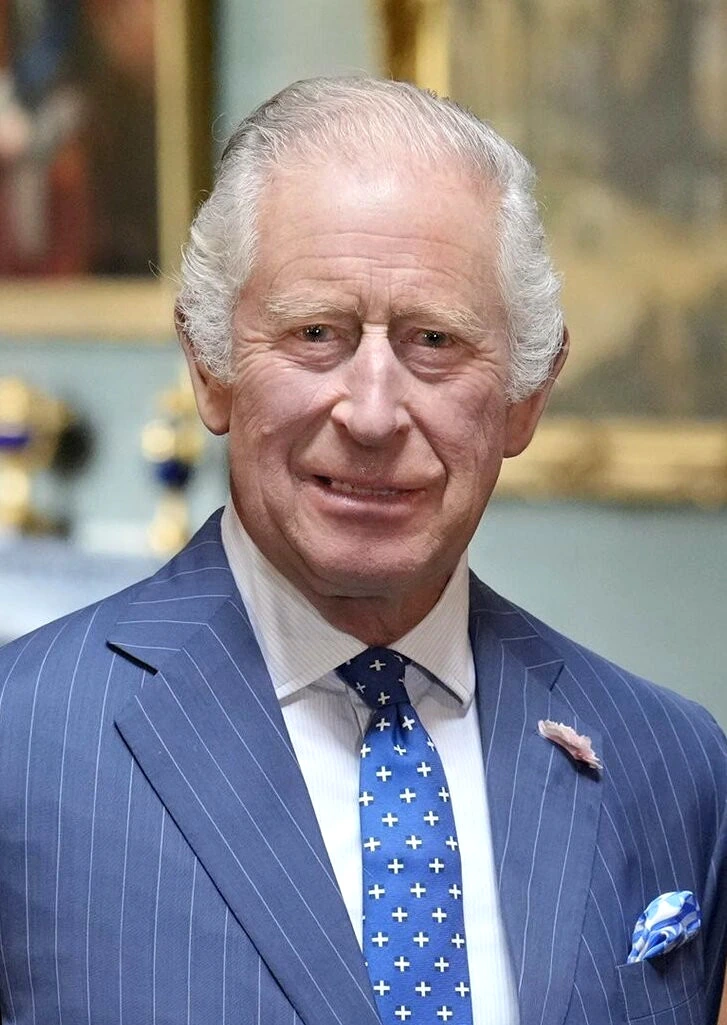
What 'King Charles III net worth' usually means (and why estimates vary so much)
When a headline says 'King Charles III net worth,' it almost never means what we'd normally mean when we calculate a person's net worth. You can also look at the latest estimates and breakdowns of King Charles III net worth to understand why credible sources still disagree king charles 3 net worth. Usually, personal net worth is straightforward: add up what someone owns, subtract what they owe, done. For a monarch, that calculation gets complicated fast. Some assets are held in royal structures that Charles controls in his role as sovereign but doesn't personally own outright. Other assets are genuinely private. Some properties are technically state-held. And because royals don't file publicly accessible financial disclosures the way a listed company does, valuations rely heavily on estimates and assumptions.
TIME summed it up plainly in 2023: 'no one really knows' Charles's exact net worth. That's not a cop-out. It reflects the fact that royal finance is genuinely structured in a way that blurs the line between personal, institutional, and state wealth. The number you see in a headline reflects the methodology of whoever published it, not an audited personal balance sheet. So if you've landed here searching 'king charles 111 net worth' (and yes, the '111' search is a very common misspelling of 'III'), the most important thing to understand first is that there is no single correct figure, but there is a responsible range.
Where King Charles III's income actually comes from

The Royal Family's own financial framework identifies three distinct income streams for the monarch. Understanding each one matters because different sources treat them differently when building a net worth estimate.
The Sovereign Grant
The Sovereign Grant is public funding. It's calculated as a percentage of the Crown Estate's revenue account profits and paid to the Royal Household to cover official duties: staff, official travel, property maintenance, and so on. For 2022-23, the total Sovereign Grant was £86.3 million, which included both a core grant and additional funding tied to the ongoing Buckingham Palace reservicing project. By 2025-26, that figure rose to £132.1 million, though a 2023 review of the percentage formula is expected to reduce it once reservicing is complete. Crucially, the Sovereign Grant is not personal income for Charles. The Crown Estate's profits go to HM Treasury, and the Grant flows back to the Royal Household as an institutional budget. It doesn't count toward his personal wealth.
The Duchy of Lancaster and the Privy Purse

This is where things get genuinely personal. The Duchy of Lancaster is a portfolio of land, property, and financial assets held in trust for the sovereign. As the Duke of Lancaster, Charles receives the Duchy's annual net surplus via the Privy Purse, which is essentially the monarch's private income account. For the year ended March 2024, that adjusted net surplus was £27.4 million. For the year ended March 2025, it came in at £24.4 million. The Privy Purse is used to cover both official expenditure that isn't funded by the Sovereign Grant and Charles's private personal spending. The important distinction here is that Charles receives the annual income from the Duchy, not ownership of the capital itself. He can't sell the estate. That income-not-capital structure is exactly why different analysts reach such different valuations when they try to attach a 'net worth' figure to it.
Personal wealth and private income
Beyond the Sovereign Grant and the Privy Purse, Charles holds genuinely private assets: personal property (including Highgrove House), private investments, savings, and inherited wealth. The amount of income generated here is not publicly reported, which is part of why estimates vary so widely. When the Guardian put his private fortune at £1.8 billion in 2023, it was including valuations of assets in this category that other outlets either didn't value or chose to exclude. The House of Commons Library, in its December 2025 briefing on the finances of the monarchy, specifically notes that personal income from privately owned assets remains unreported.
Assets and wealth snapshot: what's included and what isn't

Property valuation is the single biggest driver of the spread between estimates. Forbes, in a 2023 analysis, described Charles's real-estate empire as worth around $25 billion when you factor in properties like Buckingham Palace. Forbes (May 4, 2023) describes Charles’s real-estate portfolio and illustrates how valuations of prominent properties such as Buckingham Palace can expand net worth estimates dramatically depending on what’s counted as a personal asset Forbes, in a 2023 analysis, described Charles's real-estate empire as worth around $25 billion. But Buckingham Palace is held by the Crown in trust for the nation. Charles doesn't own it in any meaningful personal sense. Whether a source includes or excludes state-held palaces will swing the headline figure by billions.
| Asset/Income Source | Estimated Scale | Counts as Personal Net Worth? |
|---|---|---|
| Buckingham Palace | Valued in billions (state-held) | Generally no |
| Crown Estate properties | Enormous portfolio (state-managed) | No |
| Duchy of Lancaster (capital value) | Multi-billion estate | Disputed, usually excluded |
| Duchy of Lancaster income (annual surplus) | ~£24-27m per year (recent years) | Yes, as income stream |
| Highgrove House and personal property | Privately owned | Yes |
| Private investments and savings | Undisclosed | Yes (estimated) |
| Sovereign Grant | £86.3m (2024/25), £132.1m (2025/26) | No (institutional budget) |
The Duchy of Lancaster itself deserves a specific note. Its capital value runs into the billions, but because Charles only receives the income and cannot dispose of the capital, most serious analysts treat it as an income source rather than a balance-sheet asset he personally 'owns.' The same structural logic applies to the Duchy of Cornwall when considering the Prince of Wales. These are entitlements, not outright ownership stakes.
How net worth is estimated for royalty (and why it's harder than it looks)
Wealth estimators working on royal figures typically take one of two approaches. The narrower approach focuses on what Charles genuinely controls and could theoretically liquidate: private property, personal investments, and savings accumulated over decades. This tends to produce the lower end of estimates, roughly in the £600-700 million range. Painted James Charles net worth searches often run into the same problem as royal net worth estimates, because different sources use different methods and access to information. The broader approach layers on top of it the capital value of assets Charles has administrative control over as monarch, even if he doesn't personally own them outright. That's where you get into the £1.8 billion territory.
Neither approach is fraudulent, but neither is a clean personal net worth calculation the way you'd calculate yours or mine. The underlying problem is structural: royal wealth is deliberately constructed to separate personal, institutional, and state finances, but in practice those categories overlap in ways that make a clean single number impossible. There's no public audit of Charles's personal balance sheet, no regulatory filing that captures it, and no agreed industry standard for what to include. Analysts fill those gaps with assumptions, and different assumptions produce different headlines.
A timeline: how Charles's financial position has shifted over the years
Charles's financial picture changed substantially at several key moments. For most of his adult life, his primary institutional income came from the Duchy of Cornwall, which funds the Prince of Wales. He also accumulated considerable personal wealth through inheritance (notably from the Queen Mother and later Queen Elizabeth II), private investments, and property. When Queen Elizabeth II died in September 2022 and Charles acceded to the throne, his financial structure shifted entirely. The Duchy of Cornwall passed to Prince William (as the new Prince of Wales), and Charles's institutional income switched to the Duchy of Lancaster via the Privy Purse. He also inherited personally from the Queen, though the exact figure was not disclosed publicly. Inheritances between sovereigns are exempt from inheritance tax in the UK under a longstanding arrangement, which means what he inherited from his mother passed to him intact.
The Sunday Times Rich List's 2025 figure of £640 million reportedly represents a rise of around £270 million compared to Queen Elizabeth II's estimated fortune at the time of her death, suggesting the accession and inheritance added meaningfully to his personal position. The Sovereign Grant itself also moved around this period: the 2023 Royal Trustees review adjusted the percentage formula in response to expected offshore wind profits boosting Crown Estate revenues, setting the grant at £132.1 million for 2025-26 while flagging plans to reduce it after the Buckingham Palace reservicing project wraps up.
King Charles III vs other 'Charles' figures on this site
Since this site tracks wealth across many notable people named Charles, it's worth being direct: King Charles III is a very specific individual and his financial situation is not comparable to, or easily confused with, any other Charles covered here. Charles Three net worth estimates vary because royal finances mix personal, institutional, and state-linked assets, with few figures independently audited King Charles III is a very specific individual. He is the reigning UK monarch, born in 1948, who acceded to the throne in September 2022. His wealth derives from sovereign structures, aristocratic inheritance, and private assets built up over decades in a very particular constitutional context. Other Charles figures on this site, whether athletes, entrepreneurs, or entertainers, accumulated wealth through entirely different mechanisms: business revenue, contracts, endorsements, or investment portfolios that are far more transparent. If you've landed here looking for someone like Charles Southall III or a similarly named figure, the financial frameworks involved are completely different. The royal context makes King Charles III's net worth uniquely opaque in ways that don't apply to those other profiles.
How to interpret the number responsibly
Treat any single-number headline for King Charles III's net worth with healthy skepticism. The responsible way to think about it is as a range with a methodology attached. The lower end, around £640 million (Sunday Times Rich List 2025), reflects a relatively conservative estimate focused on identifiable personal assets and excludes ambiguous institutional holdings. The upper end, around £1.8 billion (Guardian 2023), reflects a broader inclusion of assets Charles controls in his sovereign role, even where ownership is legally complex. Both figures are plausible depending on your definitions. Neither is authoritative in the way a corporate balance sheet would be.
When evaluating a source, ask three questions: Does it clearly state what's included and excluded? Does it acknowledge the income-versus-capital distinction for the Duchies? And is it relying on publicly verifiable figures (like the Duchy of Lancaster annual accounts or Sovereign Grant reports) rather than purely speculative property valuations? Sources that answer yes to all three are worth taking seriously. Sources that slap a single confident number on royal wealth without any of that context are almost certainly oversimplifying.
Where to check the latest estimate and how to verify it
For the most current and reliable picture, here are the sources worth checking directly:
- The Sunday Times Rich List (published annually, usually in May): gives a well-researched personal fortune estimate updated each year. The 2025 figure is £640 million.
- The Duchy of Lancaster Annual Report and Accounts (published each autumn on duchyoflancaster.co.uk): gives the exact net surplus paid to the Privy Purse for the most recent financial year. The 2024-25 figure was £24.4 million.
- The Sovereign Grant Annual Report (published on royal.uk and via GOV.UK): breaks down how the Grant was spent and what the current reserve looks like. The 2025-26 grant is set at £132.1 million.
- The House of Commons Library briefing 'Finances of the Monarchy' (updated periodically, most recently December 2025): gives a clear, politically neutral breakdown of all three income streams with current figures.
- The Royal Family's own Royal Finances page (royal.uk): provides the official framework for understanding what each funding stream is for, though it naturally doesn't publish a personal net worth figure.
If you want to sanity-check a net worth figure you've seen quoted somewhere, cross-reference it against the Duchy of Lancaster accounts and the Sunday Times methodology. If the figure is dramatically higher than £640 million, check whether the source is including state-held properties like Buckingham Palace or the Crown Estate, which inflates the number beyond what most analysts consider 'personal' wealth. If the figure seems suspiciously precise, that's usually a sign the source has assigned false confidence to inherently murky valuations. A responsible range of £640 million to £1.8 billion, depending on methodology, is where the credible evidence currently sits as of mid-2026.
FAQ
Is the “king charles 111 net worth” search just a typo, and does it affect which person the numbers refer to?
The “111” is almost always a typo for “III,” but it can also be a signal that the page you found is mixing search terms from different people named Charles. If you are using the figure as a reference, verify that the source explicitly discusses King Charles III’s sovereign income streams (Sovereign Grant, Duchy of Lancaster, Privy Purse) rather than a generic “net worth” template.
Why do some “net worth” numbers for King Charles III seem to be personal wealth when they probably are not?
No. The most common mistake is treating the broad, headline number as “personal money.” Because some major assets are legally state-held or held in trusts that Charles administers, a net worth estimate can change dramatically depending on whether the methodology counts state-linked property and institutional control.
When reading King Charles III net worth estimates, should the Duchies be counted as income, capital, or both?
Look for whether the source separates income streams from capital value. In royal finance, Duchy-related structures typically represent income entitlements (what Charles receives annually), not a simple “can sell the estate” ownership stake. If an estimate lumps capital and income together, it will often look higher than conservative methodologies.
How can I tell if an estimate is inflating King Charles III’s net worth by counting state-held properties?
Yes, if you are trying to sanity-check a figure. A practical approach is to ask whether the estimate includes state-held palaces like Buckingham Palace or Crown Estate-related assets. If those are included as if they were Charles’s personal holdings, the number can inflate by billions compared with estimates focused on personally controlled assets.
What drives the biggest swings between the lower and higher King Charles III net worth estimates?
The upper and lower ends often reflect different valuation dates and different assumptions about property. Real estate is the biggest swing factor, especially when sources use different appraisal methodologies or decide how to treat trust-held and sovereign-controlled properties.
What red flags should I watch for in a King Charles III net worth article that gives one confident number?
If a source cannot explain what counts as personal ownership versus administrative control, treat the number as less reliable. “Confident” single-number headlines are usually a shortcut where hidden assumptions are not disclosed, particularly for private investment valuations and unreported personal income.
How do I cross-check a King Charles III net worth figure if I want to verify it?
Cross-checking is easiest when the source cites specific, documentable baselines, like Sovereign Grant figures and the Duchy of Lancaster’s published accounts. If the estimate relies mostly on unsourced claims about private investments or applies a real-estate valuation to state-held assets, it is harder to verify.
Why do estimates sometimes compare badly with figures published for Elizabeth II, and how does accession change the picture?
Yes. After accession in September 2022, Charles’s institutional income switched from Duchy of Cornwall-related entitlements to the Duchy of Lancaster via the Privy Purse. So a “net worth at death” number for a prior monarch or a pre-2022 comparison may not be apples to apples.
Does tax treatment (like inheritance tax rules) explain some of the differences in net worth estimates over time?
In the UK context described here, inheritances between sovereigns can be exempt from inheritance tax under a longstanding arrangement. That can reduce friction in the transfer of wealth, so the question for net worth estimates becomes, “How much was inherited and counted,” not “How much tax was paid on the inheritance.”