
The most credible estimate puts Charles 'Lucky' Luciano's net worth somewhere between $500 million and $1 billion in today's dollars, though you'll find figures all over the map online. That range is built on a rough inflation-adjusted translation of what historical sources describe as his peak earnings: by 1925, he was reportedly grossing over $12 million per year from illegal gambling and bootlegging alone, with personal income estimated at around $4 million annually.
Charles Lucky Luciano Net Worth: Estimated Range and Sources

Derek Mansfield
6 Jul 2026
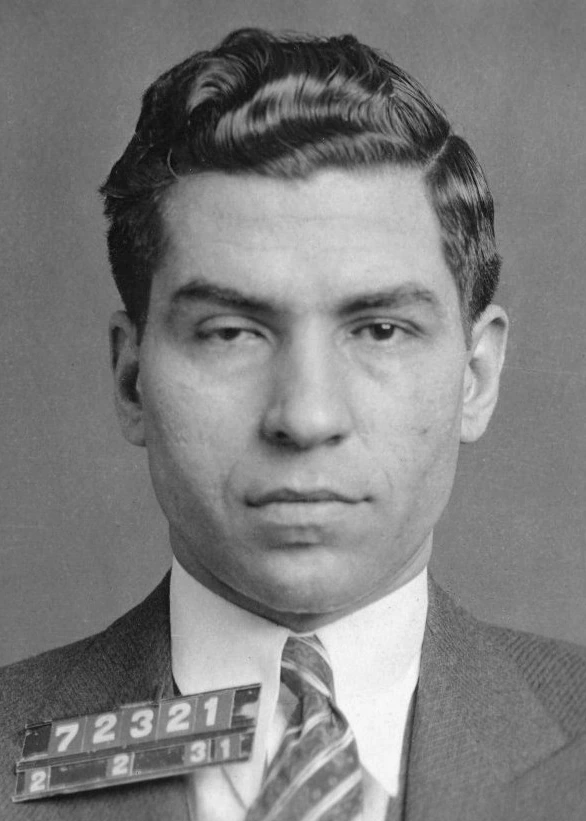
Adjust those numbers to 2026 dollars and you get a picture of serious generational wealth. But here's the honest caveat: no credible balance sheet for Luciano exists. His assets were hidden, laundered, and deliberately obscured. Any single number you read online should be treated as an informed estimate, not a verified figure.
Who Lucky Luciano Was and How He Built His Money

Charles Luciano was born Salvatore Lucania in Sicily in 1897 and came to New York as a child. By his twenties he had become one of the most strategically gifted organized crime figures in American history. He didn't just run a gang. He restructured the entire American Mafia into a national syndicate, negotiating alliances, eliminating rival bosses (including Joe Masseria and Salvatore Maranzano in 1931), and establishing the Commission, a governing body that managed disputes between the major crime families. That organizational genius is the foundation of his wealth story.
His money came from multiple criminal industries operating simultaneously. Through the 1920s and early 1930s, bootlegging was the engine: he worked closely with Meyer Lansky and Bugsy Siegel, moving alcohol across the northeastern United States, including into Philadelphia. When Prohibition ended in 1933, he pivoted aggressively into gambling operations, narcotics trafficking, and what prosecutors eventually documented as a large-scale prostitution network. He wasn't personally running street-level operations. He collected tribute, licensing fees, and a percentage of earnings from dozens of operations across New York and beyond. Think of it less as a salary and more as a CEO's cut of multiple revenue streams.
That distinction matters for understanding his net worth. Luciano's power was structural. He controlled organizations that generated income whether or not he was physically present, which is part of why even while serving time in Clinton Correctional Facility after his 1936 conviction, he reportedly continued to direct operations from prison, reportedly with access to a personal chef.
Net Worth Estimates: What the Range Looks Like and Why It Varies So Much
Most celebrity net worth aggregators peg Luciano somewhere between $100 million and $1 billion in today's dollars, with some sites using the $500 million figure as a midpoint. If you're also looking up Charles Lloyd net worth, remember that many “net worth” numbers online come from assumptions and incomplete records, just like with historical figures Luciano's net worth.
The problem is that most of those sites are working from the same handful of sources, and they're not doing original financial analysis. They cite the $12 million gross / $4 million net annual income figure (originally from Wikipedia and earlier scholarship), apply an inflation multiplier, and call it done. That process doesn't account for actual accumulated assets, spending, losses, or the decade-long disruption of his imprisonment.
The more rigorous sources, including biographies, historical scholarship, and legal record analyses, are more cautious. Researchers like Martin Gosch, who wrote extensively about Luciano's life, reconstructed his operations without producing a clean net worth number, because the data simply doesn't support one. Federal income tax records cited during investigations reportedly showed Luciano declaring as little as $22,000 per year in personal income, which was obviously a deliberate concealment of the real picture. Because there is no reliable, audited accounting, attempts to calculate Charles Lomangino net worth end up relying on similarly uncertain estimates. But that also means no audited record of his true holdings was ever established during his lifetime.
A good rule of thumb: when you see wildly different numbers across net worth sites, the spread usually reflects different inflation assumptions, different base-year income estimates, and different choices about whether to include organizational revenue versus personal take. It's not that someone is lying. It's that the underlying data is opaque by design, and each estimator fills that opacity differently.
Where His Money Actually Came From: The Wealth Channels

Breaking down Luciano's wealth into categories gives you a clearer picture of how it was structured and why estimating it is so difficult.
- Bootlegging (1920s): This was likely his single largest revenue source during its peak. He operated distribution networks in New York and Philadelphia with Lansky and Siegel, earning a cut of wholesale alcohol distribution. Gross revenue across the operation ran into the tens of millions annually.
- Gambling operations: After Prohibition ended, gambling became the primary revenue engine. Luciano had interests in numbers rackets, card games, and later casino-style operations. This was recurring, relatively stable income compared to the volatile world of bootlegging.
- Narcotics trafficking: Luciano maintained ties to heroin and opium distribution networks, though he was careful to maintain some organizational distance. After his deportation to Italy in 1946, evidence suggests he used his European base to maintain connections in the narcotics trade.
- Prostitution networks: This was what ultimately brought him down legally. Prosecutors documented his involvement in managing dozens of brothels across New York. The 1936 trial resulted in conviction on 61 counts.
- Tribute and syndicate fees: As the architect of the National Crime Syndicate and the Commission, Luciano collected ongoing payments from affiliated crime families and operations across the country. This was recurring, passive income that didn't require direct involvement.
- Legitimate business fronts: Like most organized crime figures of his era, Luciano reportedly held interests in businesses used for money laundering, including restaurants, laundries, and other cash-heavy enterprises. These also provided cover income.
The challenge with turning any of this into a net worth figure is that 'net worth' implies a balance sheet: assets minus liabilities. Market Realist describes the general net worth methodology as starting from a balance-sheet concept, assets minus liabilities, and explains how some estimates are built from financial analysis and related research rather than a verified ledger net worth figure is that 'net worth' implies a balance sheet: assets minus liabilities. .
For Luciano, assets were hidden in nominees' names, moved through shell structures, or held in cash. There's no inventory of real estate, bank accounts, or business holdings that survived in any accessible public record. What we have are income estimates, not asset ledgers. Because of that, estimates for Charles Lamanna net worth are often presented as educated guesses rather than audited totals.
Legal Outcomes and What They Did to His Assets
Luciano's 1936 conviction was a landmark moment in American legal history and a significant financial disruption. He was found guilty on 61 counts of compulsory prostitution and sentenced to 30 to 50 years in state prison. Prosecutor Thomas Dewey built the case specifically by targeting the financial infrastructure of the operation rather than just the street-level crimes. That legal strategy, while focused on prostitution charges rather than a comprehensive asset seizure, removed Luciano from active management for nearly a decade.
He served approximately 9.5 years before being paroled in January 1946, a release linked to a wartime cooperation narrative (he had reportedly assisted U.S. Naval Intelligence in securing the New York docks and, later, facilitating contacts for the Allied invasion of Sicily). Upon release, he was immediately deported to Italy, which ended any direct control he could exercise over American assets and operations.
The deportation matters enormously for net worth discussions. Luciano couldn't legally re-enter the United States after 1946. He lived in Italy, later traveled briefly to Cuba (before being expelled under U. S.
pressure), and died in Naples in 1962. That 16-year exile significantly disrupted his ability to control, consolidate, or transfer whatever wealth he had accumulated. There were no documented large-scale asset seizures in the modern RICO-era sense (that legal framework didn't exist yet), but the effective consequence was that his organizational control eroded and his ability to collect ongoing income from American operations diminished substantially.
Congressional records from 1951 show he was still under law enforcement scrutiny in Italy related to cash and import activity, suggesting ongoing but reduced financial activity.
How Luciano's Wealth Compares to His Era and His Peers

Context matters a lot when evaluating historical criminal wealth. The 1920s and 1930s were a unique moment: Prohibition created an enormous illegal market with no organized competition from legal businesses, and the regulatory and law enforcement infrastructure for combating organized crime was far weaker than it became later. That environment allowed figures like Luciano, blank" rel="noopener noreferrer">Al Capone, Meyer Lansky, and Bugsy Siegel to accumulate wealth at a scale that's genuinely hard to replicate today.
| Figure | Estimated Peak Annual Earnings (Historical) | Rough Modern Equivalent | Primary Sources | Key Disruption |
|---|---|---|---|---|
| Lucky Luciano | $4M personal / $12M gross (c.1925) | $500M–$1B net worth estimate | Wikipedia citing earlier scholarship; NetWorthList | 1936 conviction; 1946 deportation |
| Al Capone | Often cited at $60M–$100M annual gross (1920s) | Often cited $1B+ in modern estimates | Widely reported; no verified asset inventory | 1931 tax evasion conviction; died 1947 |
| Meyer Lansky | Estimated $300M–$400M (1970s-era FBI estimates) | Frequently cited in $600M–$1B range | FBI testimony; journalistic accounts | Never convicted of major charges; died 1983 |
| Bugsy Siegel | Estimated earnings in millions; no precise annual figure | Estimates in low hundreds of millions modern | Journalistic accounts; crime history books | Murdered 1947; assets unclear |
Luciano's organizational role arguably made him the most important figure of the group even if Capone had higher gross revenue at peak. Luciano's contribution was structural: the National Crime Syndicate he helped build continued generating wealth for other crime families for decades after his deportation. That kind of influence doesn't translate cleanly into a personal balance sheet, which is another reason estimates for him specifically tend to be conservative compared to Capone or Lansky.
It's worth noting that other historical figures covered on sites like this one, such as Charles Laughton or Charles Lloyd, present entirely different estimation challenges because their wealth came from documented entertainment contracts and royalties. If you meant Charles Laughton, his net worth is tied to his acting earnings rather than crime-related income. Luciano's financial picture is uniquely difficult because concealment was a structural feature of how the wealth was held, not just an accidental gap in the record.
How to Use Net Worth Estimates for Someone Like Luciano Without Getting Misled
If you're doing research on Luciano's wealth for academic, journalistic, or general curiosity purposes, here's what I'd actually recommend rather than just accepting whatever figure tops a Google search. If you're comparing claims about Charles d Scanlon net worth, it helps to treat any number the same cautious way, because details can be inconsistent and hard to verify.
- Start with the income estimates, not the net worth figure. The $12 million gross / $4 million personal income figure for 1925 comes from credible historical scholarship and is the most defensible starting point. Use a historical inflation calculator (the Bureau of Labor Statistics CPI tool is free) to translate those to 2026 dollars. That gives you a grounded annual income figure you can work with.
- Apply a multiplier cautiously for accumulated wealth. If Luciano earned approximately $4 million per year in peak years across roughly 15 active years before his 1936 conviction, that's a theoretical accumulated total of $60 million pre-1936 (before spending, loss, and inflation adjustment). In 2026 dollars, that $60 million translates to roughly $1.3 billion. But subtract meaningfully for lifestyle spending, the disruption of imprisonment, and the difficulty of holding hidden assets over time.
- Look for book-length sources for the most detailed reconstruction. Biographies by authors like Martin Gosch and journalism-based histories are more nuanced than aggregator sites. They won't give you a single number, but they'll give you a better sense of the organizational and financial structure.
- Treat any single number from a celebrity net worth aggregator as a rough order of magnitude, not a fact. Most of those sites copy each other. If five sites all say the same figure, that's not five confirmations. It's likely one source being repeated four more times.
- Be explicit about what the number represents. Is it peak annual income? Estimated accumulated wealth at the time of conviction? An inflation-adjusted lifetime earnings figure? These are very different things, and most sites don't specify. When you use or cite a figure, say what it means.
- Check for primary source context. The New York County District Attorney archives contain closed case files from the 1936 trial. For serious research, those records, along with Congressional records from the 1951 Kefauver Committee hearings on organized crime, are as close to primary financial evidence as you'll find.
The honest summary is this: Luciano was genuinely wealthy by any measure of his era, and translating that to modern dollars produces a figure in the hundreds of millions to low billions. These estimates for Charles Loflin's net worth are similarly shaped by missing documentation and reliance on indirect indicators Charles Loflin net worth. But the uncertainty band around any specific number is enormous, and anyone who gives you a precise figure without acknowledging that uncertainty is either guessing or copying someone else's guess. The most intellectually honest position is a range of $500 million to $1 billion in today's dollars, held loosely, with the understanding that we're estimating income flows for a man who deliberately hid his money and whose assets were never formally inventoried.
FAQ
Why do different websites give wildly different numbers for charles lucky luciano net worth?
Most sites are back-calculating from a few reused income claims, then applying different inflation multipliers and deciding different “ownership rules” (whether to count organizational revenue, personal take, and money lost to spending or disruption). Because there is no surviving audited asset list, the estimator choice, not the underlying facts, drives much of the spread.
Can you estimate Luciano’s net worth more accurately by focusing on tax records or declared income?
You can use declared income as a lower-bound indicator, but it mainly shows concealment intensity. Declared figures can be intentionally suppressed, and prosecutors often had incomplete access to offshore holders, nominees, and cash movements. Treat tax declarations as evidence of concealment, not a direct asset calculator.
Does Luciano’s time in prison mean his wealth should be lower in net worth estimates?
It likely reduced active control and slowed collection, but it does not necessarily shrink wealth the way a salary would. If he had already accumulated assets through nominees or intermediaries, those could remain intact during incarceration. Estimates that assume “no income during prison” can understate holdings.
How should I interpret the $12 million gross and $4 million personal income figures used online?
Treat them as rough peak-flow snapshots, not a complete accounting of lifetime accumulation. Net worth would also depend on reinvestment, operational costs, bribes, losses, and confiscations (if any) that may not be fully documented. Using a peak annual figure to represent total net worth is a common methodological shortcut.
What is the biggest mistake people make when comparing charles lucky luciano net worth to other criminals like Al Capone?
They compare personal net worth to a figure that may include different categories. Some estimates blend personal earnings with organizational revenue, while others try to isolate a “controller’s cut.” Even when both numbers use a “today’s dollars” conversion, the underlying definitions can be mismatched.
If Luciano’s wealth was hidden in nominees, how do researchers handle that?
They usually cannot reconstruct ownership with confidence, so they infer holdings indirectly from operational scale, reported income, and known networks of intermediaries. That means any “net worth” number is closer to a scenario range than a ledger, and two researchers can reach different ranges from the same qualitative facts.
Does deportation after 1946 affect estimates of charles lucky luciano net worth?
Yes, but indirectly. Deportation limits his legal access and ability to consolidate or transfer American assets, and it likely weakened direct collection from U.S. operations. However, if wealth was already parked through intermediaries, part of his holdings could still exist, so deportation does not automatically mean rapid loss of wealth.
Why do some estimates claim Luciano’s wealth is in the hundreds of millions, while others push toward a billion?
The main drivers are assumptions about compounding and asset conversion. If you assume large portions of criminal income were successfully saved and invested, the range moves upward. If you assume heavy spending, frequent losses, or limited ability to convert income to stable assets, the range falls.
Is there any scenario where you could treat a single number for charles lucky luciano net worth as “reliable”?
Only if you can tie the number to a specific, documented asset inventory or verified seizure records. For Luciano, that kind of complete documentation does not exist publicly, so any precise single figure should be treated as an estimate with hidden assumptions, not a verified valuation.