
The most defensible estimate of Charles Laughton's net worth at the time of his death on December 15, 1962 is approximately $900,000, which is the figure most commonly cited by net-worth aggregators. In today's dollars that works out to somewhere between $8 million and $10 million depending on which inflation index you use. That number almost certainly comes from estate-adjacent records rather than a published probate filing, so treat it as a reasonable ballpark rather than a confirmed court document figure. What matters more than pinning down the exact number is understanding what that wealth was made of, how Laughton built it over four decades, and why you'll see wildly different figures depending on where you look.
Charles Laughton Net Worth at Death: Estate Estimate

Derek Mansfield
29 Apr 2026
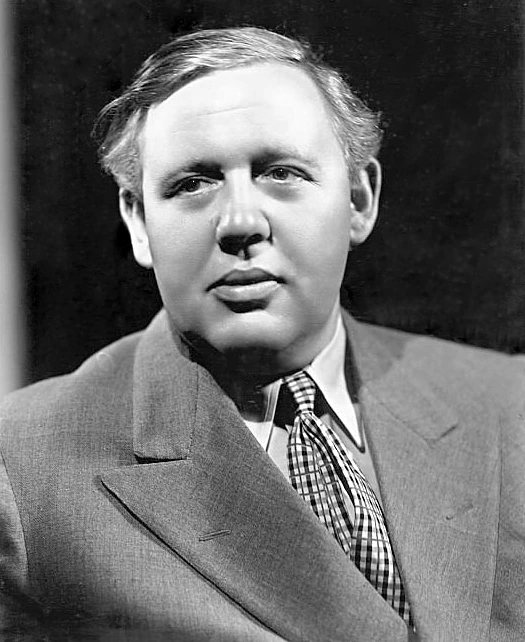
Which Charles Laughton are we actually talking about?

Almost every search for "Charles Laughton net worth" is looking for the English actor and director born July 1, 1899 in Scarborough, Yorkshire, who died in Los Angeles on December 15, 1962. That's the same Charles Laughton who played Captain Bligh in Mutiny on the Bounty, Henry VIII in The Private Life of Henry VIII (for which he won the Academy Award for Best Actor in 1933), and who directed the cult classic The Night of the Hunter in 1955. He became a U.S. citizen in 1950 after living and working in Hollywood for decades.
Name confusion is genuinely possible here. There's a Charles Lloyd (the jazz musician) whose financial profile looks nothing like Laughton's, and there are various other Charles figures across entertainment and business whose net worth articles can surface in the same search results. If you came here looking specifically for Charles Lomangino net worth, note that this article is about Charles Laughton, not Lomangino. If you're researching a living person or a more recent public figure named Charles Laughton, you're likely thinking of someone else entirely. The man this article covers has been dead since 1962, and his "net worth" is really a question about his estate value at the time of death.
What "net worth at death" actually means for a 1962 estate
When someone dies, their estate is essentially a snapshot of everything they owned minus everything they owed on the date of death. For federal estate tax purposes, the IRS ties valuation precisely to that date, which means the value of real estate, investments, personal property, royalty rights, and any business interests all get frozen at that moment. For Laughton in 1962, that would have included his Pacific Palisades property at 14954 Corona Del Mar, any liquid assets and investments, royalty streams from films and stage productions, personal property, and his share in any business arrangements.
The tricky part is that "net worth" in the popular sense and "taxable estate value" are not the same thing. Trusts, spousal transfers, charitable bequests, and liabilities all reduce what flows through a probate filing. Laughton was married to actress Elsa Lanchester for decades, and when she died in 1986, her own probate filing set up a $250,000 trust payable to a hospital. That kind of structure illustrates exactly why published "net worth" figures for historical couples can diverge significantly from the gross estate value in public records. What Laughton "had" and what the probate court processed could be two different numbers.
The best sources to estimate his estate value today
If you want the most defensible figure, the place to start is Los Angeles County Superior Court probate records from late 1962 through 1963. Because Laughton was a U.S. citizen and died in Los Angeles, his estate would have been filed there. These records are not always digitized or easily searchable from home, but they are technically public record and can be requested through the court clerk's office or a probate records researcher.
The second major resource is the Charles Laughton papers collection held at UCLA (accessible through the Online Archive of California). That collection spans roughly 1920 to 1964, with the bulk concentrated between 1940 and 1962. It won't contain a signed probate inventory, but it may include contracts, correspondence about finances, and records related to his production work that let you triangulate income. Think of it as circumstantial evidence for wealth rather than a balance sheet.
For production-specific earnings context, the AFI Catalog contains detailed production histories for his major films. MGM's records for Mutiny on the Bounty and the contracts tied to his later TV appearances and Broadway directing work are the kinds of documents biographers have used to estimate his career earnings. None of these are net worth records on their own, but they build the income side of the picture.
- Los Angeles County Superior Court probate filing (1962/1963) — the most direct route to an estate inventory
- Charles Laughton papers at UCLA/OAC (1920–1964) — contracts, correspondence, and financial context
- AFI Catalog entries for his major productions — contract and production-earnings context
- IRS estate tax statistics for 1962 deaths — useful for calibrating what estates of this size looked like at the time
- Reputable published biographies (Simon Callow's biography is the most cited) — income trajectory narrative, though not probate evidence
How Laughton actually built his wealth
Laughton's money came from a remarkably diverse set of income streams across four decades, which is part of why even a rough estimate requires some judgment. He wasn't just a hired actor picking up studio paychecks, though those were substantial during Hollywood's golden era. He was also a stage performer, a production company co-founder, a director, a touring reader/lecturer, and a television performer in his later years.
Studio contract years and major film earnings

From the early 1930s through the 1940s, Laughton worked under contracts at major studios including Paramount and MGM. His Oscar win in 1933 for The Private Life of Henry VIII, made in the UK with Alexander Korda, significantly raised his market value. By the mid-1930s he was among the most recognizable and critically respected actors in Hollywood. Films like Mutiny on the Bounty (1935), The Hunchback of Notre Dame (1939), and Witness for the Prosecution (1957) were not only commercial successes but negotiated under contracts that, by that era's standards, generated serious money. Star salaries at major studios in the late 1930s and 1940s regularly ran into the tens of thousands of dollars per picture, with top-tier talent earning more.
Mayflower Pictures and production involvement
In the late 1930s, Laughton co-founded Mayflower Pictures with German producer Erich Pommer. The company produced several films in the UK, with Paramount holding exclusive distribution rights outside the UK for a number of those titles. This meant Laughton had a producer's stake in the revenues, not just a performer's fee. Production company involvement of that kind could generate royalty-like income streams for years after a film's initial release, and it positioned him financially in a way that pure actors of the era often weren't.
Stage work, reading tours, and television
By the late 1940s and through the 1950s, Laughton carved out a second major income stream through live performance. His public reading tours, where he would read literature aloud to large audiences across North America, were both critically praised and commercially successful. He also directed on Broadway, including a celebrated production of Major Barbara. Television appearances in the 1950s and early 1960s added another layer. These weren't passive royalty checks but active, fee-generating engagements that kept cash flowing well past his peak studio years.
The Pacific Palisades property

The estate at 14954 Corona Del Mar in Pacific Palisades was Laughton's primary California home. This property is now listed in modern real estate markets for around $19.9 million. That figure is completely irrelevant to his 1962 estate value, Pacific Palisades real estate appreciation over 60-plus years makes modern pricing useless for historical net worth inference. But the property itself, at 1962 values, would have represented a meaningful portion of his total estate, given that it was a substantial home in one of Los Angeles's desirable neighborhoods even then.
Why published net worth numbers vary so much
The $900,000 figure appears on multiple net-worth aggregator sites, but none of them cite a probate document. That number has almost certainly been passed from one site to another without anyone going back to verify the original source. This is extremely common for historical figures who died before the internet era. The aggregators that publish these numbers are often scraping each other, not court records.
Beyond source recycling, there are at least three legitimate reasons why estimates can vary even among good-faith researchers. First, asset valuation methodology differs: what you include (royalties, personal property, business interests) and how you value each category affects the total significantly. Second, inflation adjustment creates confusion when people convert a historical estate figure to modern dollars using different indices or base years. The BLS [CPI Inflation Calculator](https://www.
bls. gov/data/inflationcalculatorinside. htm) explains how to convert amounts from a given past calendar year into modern dollars using the average CPI for that year. Third, the distinction between gross estate and net estate (after debts, taxes, and bequests) means that two sources citing the "same" estate can produce different numbers depending on which figure they're actually using.
| Factor | How It Inflates the Number | How It Deflates the Number |
|---|---|---|
| Inflation conversion | Using CPI with a high multiplier can push $900K to $10M+ | Choosing a lower-multiplier index or no adjustment leaves it at $900K |
| Royalty valuation | Ongoing film royalties could add significant present value | Royalties uncertain or already transferred; may not appear in estate |
| Real estate | Modern property value misapplied to historical figure | 1962 assessed value used, which was much lower |
| Gross vs. net estate | Gross estate before debts and taxes used as 'net worth' | Net estate after liabilities, trusts, and bequests is significantly lower |
| Production interests | Mayflower-era distribution royalties counted | Company wound down before death; minimal residual value |
How to verify or update the figure today

If you want to do this properly rather than just accept the $900,000 figure, here's a practical research checklist. None of these steps are fast, but together they would give you a far more defensible answer than anything on a net-worth aggregator site.
- Contact the Los Angeles County Superior Court clerk and request the probate file for Charles Laughton, deceased December 15, 1962. Ask specifically for the inventory and appraisal (the document listing all assets at date-of-death value) and the final accounting.
- Search the Online Archive of California for the Charles Laughton papers at UCLA. Request access to the collection and look for any financial correspondence, contract summaries, or estate-related documents from the 1960–1964 period.
- Check the California State Archives and the Los Angeles County Assessor's historical records for the 1962 assessed value of 14954 Corona Del Mar. This gives you the real estate component independent of modern pricing.
- Use the BLS CPI Inflation Calculator with 1962 as your base year to convert any confirmed estate figures to 2026 dollars. As of April 2026, $1 in 1962 is roughly equivalent to $10.50 to $11.00 today.
- Cross-reference any dollar figures you find against the IRS Statistics of Income data for estates filed in 1962–1963 to see whether the reported figure is plausible relative to estates of comparable size from that period.
- If you find a specific probate value, check whether it is the gross estate (before debts and taxes) or the net taxable estate. The difference can be significant depending on Laughton's liabilities and any spousal transfers to Elsa Lanchester.
One practical shortcut: published biographies, especially Simon Callow's detailed work on Laughton, sometimes reference financial details drawn from archival research that can point you toward the right primary documents. They won't give you a probate inventory, but they can confirm which archives to prioritize.
The bottom line on Charles Laughton's wealth
The most honest answer is that $900,000 at time of death in 1962 is the best publicly available figure, and it's plausible given what we know about his career. In today's money that's roughly $9 million to $10 million, which feels consistent with a top-tier Hollywood actor who also had production and stage income over four decades and owned significant Los Angeles real estate. That said, this figure has not been confirmed against a probate inventory, so treat it as a well-informed estimate rather than a documented fact.
The trajectory behind that number is what makes it credible. Laughton wasn't a one-era star who cashed in during the studio system and then faded. He reinvented himself multiple times, from London stage actor to Hollywood star to independent producer (through Mayflower Pictures) to touring reader/lecturer to Broadway director to television performer. Each reinvention came with its own income stream. By 1962 he was still working, still earning, and owned a prime piece of Pacific Palisades real estate. An estate in the high six figures to low seven figures for a figure of his stature and longevity makes genuine sense.
If you're comparing this to other Charles figures in the same era, the scale is notably different from the kind of wealth accumulated by entrepreneurs or industrialists. Laughton's wealth was earned income from performance and creative work, not compounding business equity. That's a meaningful distinction when you consider that someone like Charles Lucky Luciano, for instance, operated in an entirely different financial universe with very different mechanisms for wealth accumulation, and comparing the two tells you more about career structure than about personal financial discipline or success.
For most readers, the practical takeaway is this: if you just need a number for context, use $900,000 (1962) or approximately $9–10 million in today's dollars, and acknowledge the uncertainty. If you need a number you can defend in academic or journalistic work, the LA County probate records are the only route to a primary source. Everything else is an estimate built on other estimates.
FAQ
Does the Charles Laughton net worth number ($900,000) reflect gross estate or net estate?
That figure is meant to describe the estate value at death, not your usual “assets minus assets” personal net worth statement. If you are trying to compare across sources, look for whether they use gross estate, taxable estate, or net estate after debts and specific bequests, because those buckets can differ a lot.
How does being married to Elsa Lanchester affect how Charles Laughton net worth estimates look?
The presence of his long-term spouse does not just change probate totals, it can change what gets filed under separate inventories. Elsa Lanchester’s later trust setup shows why a couple’s publicly discussed wealth may be “split” across two probate timelines rather than combined into one total figure for him.
What is the most common mistake people make when interpreting probate-based Charles Laughton wealth figures?
If the Los Angeles probate file lists both the estate inventory and claims against the estate, the “defensible” number is often the inventory baseline minus debts and administration expenses. A common mistake is to treat any headline “estate amount” as what beneficiaries actually received.
Where do film and stage royalties typically show up in an estate snapshot for someone like Charles Laughton?
Treat royalties as a category with a timing issue. Some royalties may be due but unpaid at death and therefore appear as receivables, while others may be contingent or contract-based and not recognized in the same way on day-of-death valuations.
Why can’t modern values of his Pacific Palisades home be used to infer Charles Laughton net worth?
Real estate is usually the easiest part to over-interpret. Even if a property later sold for tens of millions, the probate number should reflect 1962 valuation methods, which may be based on appraisals, condition, and comparable sales at that time.
Why might probate records still lead to different totals for the Charles Laughton estate estimate?
Probate inventories can omit or understate certain intangible items, especially if rights are structured through contracts or held by entities rather than directly owned by the decedent. That can make two diligent researchers reach different totals even when they both start from primary records.
What should I do if I cannot find the Los Angeles probate record online for Charles Laughton?
If you are searching for digitized records, try variations on the name and “probate” plus “estate” and the year 1962, and expect that not everything is OCR searchable. The court clerk office can confirm case indexing even when online databases do not.
If I want a source you can defend, what specific probate documents should I request?
Start by extracting the exact date of death stated in the probate index, then request the inventory and the final account, those are where valuations and deductions are clearer. If you only pull a petition or a short order, you may end up repeating aggregator-style numbers without the underlying valuation breakdown.
Can the UCLA Charles Laughton papers be used to confirm the day-of-death net worth figure?
The UCLA collection is likely most useful for corroborating income streams, contract relationships, and timing of engagements. It generally should not be treated as a substitute for probate inventory numbers if your goal is the day-of-death total.
How should I present today’s-dollar conversions of Charles Laughton’s $900,000 without overstating accuracy?
Yes, because inflation conversions can be sensitive to the index and base year selected. If you want comparability, state the index (CPI-U, CPI-W, or another) and the conversion methodology, otherwise “$9 to $10 million” range claims can be misleadingly precise.