
Charles H. Spurgeon's net worth at the time of his death in 1892 was modest by almost any measure, estimates based on available biographical and estate evidence suggest a personal estate in the range of a few hundred to a few thousand pounds sterling, roughly equivalent to $20,000 to $80,000 USD in today's money at most. He was not a poor man in the street sense, but he was genuinely not wealthy either, and the evidence strongly supports that this was largely intentional. What money came through his hands, and a remarkable amount did, was directed outward into institutions, publications, and charitable works rather than accumulated personally.
Charles Spurgeon Net Worth: Realistic Estimate and Sources

Derek Mansfield
5 Jun 2026
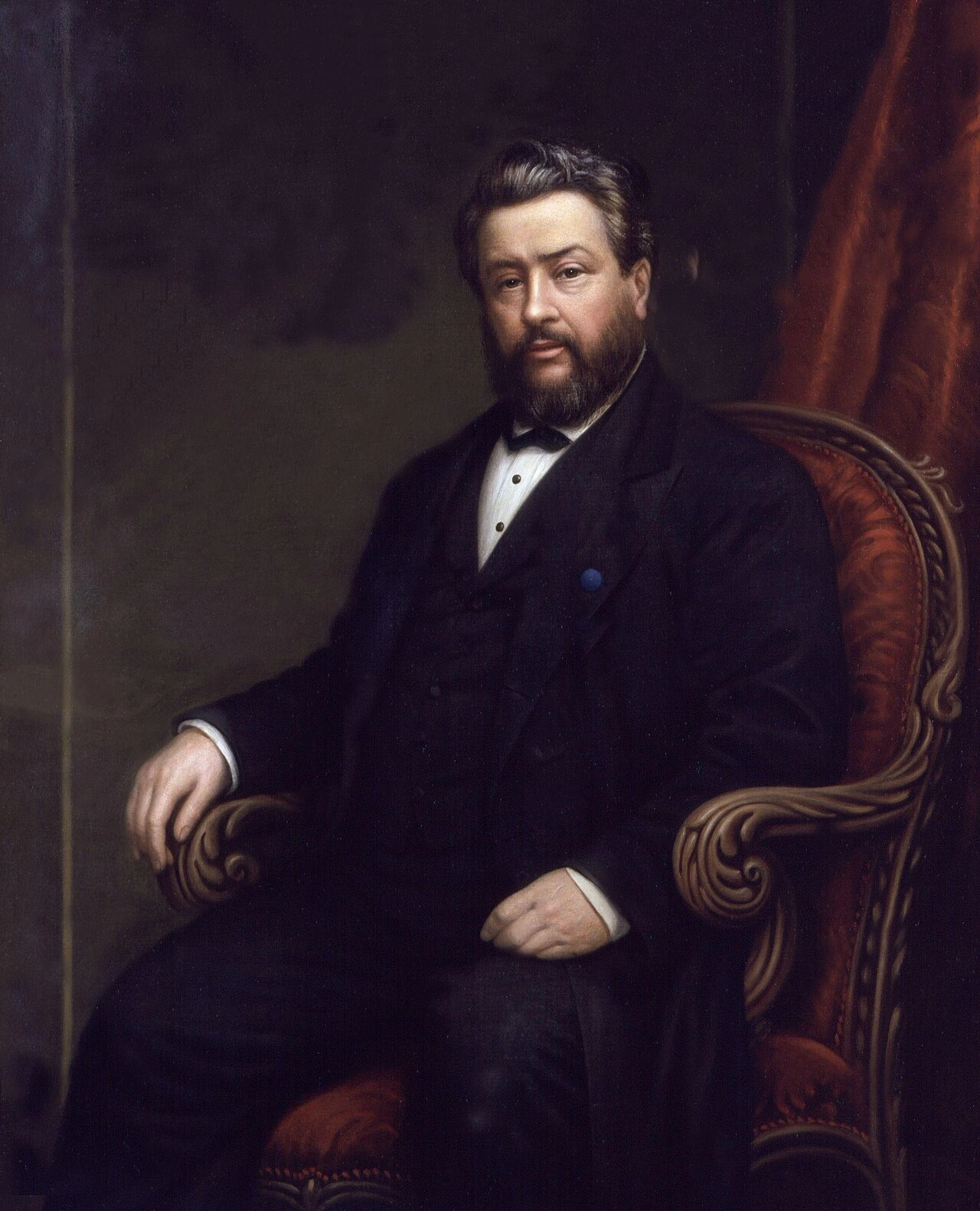
What "net worth" actually means for a 19th-century preacher

When people search for Charles Spurgeon's net worth, they're usually expecting a clean number. But applying the modern concept of net worth, total assets minus total liabilities, to a Victorian-era minister requires some translation. Spurgeon died in January 1892. There was no stock portfolio, no real estate empire, no brand equity in the contemporary sense. What he could have accumulated was: cash savings, owned property, royalty-generating publishing contracts, and equity in institutional projects. What biographers and institutional records consistently show is that most of those potential categories were either minimal or deliberately divested.
The Metropolitan Tabernacle, the orphanage, the college, these were not personal assets. They were institutional properties held by trusts or congregational bodies. So when you're asking about Spurgeon's net worth, you're really asking about his personal estate, not the financial footprint of his ministry. That distinction matters enormously, because the ministry's financial scale was genuinely large while Spurgeon's personal financial position remained comparatively humble.
Where Spurgeon's money actually came from
Spurgeon had several real income streams, and it's worth being specific about each one rather than treating his finances as a vague blur of "ministry work."
Pastoral salary from the Metropolitan Tabernacle

Spurgeon served the New Park Street congregation (which became the Metropolitan Tabernacle) from 1854 until his death. He received a pastoral stipend from the congregation. The exact figures varied over the decades and are not fully documented in publicly available sources, but Victorian-era Baptist ministers at prominent London churches typically earned between £200 and £600 per year. Spurgeon's income from this source was likely at the higher end of that range given the Tabernacle's size and membership, but it was still a professional salary rather than executive-level wealth.
Publishing royalties from Passmore and Alabaster
This is arguably the most significant and underappreciated income stream. Spurgeon's publishing partnership with Joseph Passmore and Passmore and Alabaster was genuinely prolific. According to accounts of the relationship, Passmore recognized enormous public demand and committed to publishing one sermon per week, a volume that ultimately reached 63 published volumes of collected sermons over the course of Spurgeon's ministry. The Sword and the Trowel magazine, which Spurgeon edited, was also published through this partnership.
Bibliographic records at Open Library confirm the publisher's catalogued output, and the 1893 Sword and the Trowel issue confirms the publishing ecosystem's scale right up to his death. Royalties from this output would have been a recurring and meaningful income source, though no surviving royalty ledger has been publicly surfaced to give exact annual figures.
Book sales and wider publication rights
Beyond the weekly sermons, Spurgeon authored major works including "Morning and Evening," "The Treasury of David" (a multi-volume commentary on Psalms), and "Lectures to My Students," among others. These were sold broadly and, in some cases, sold across the Atlantic in American editions. Whether Spurgeon received royalties from American printings or whether those were authorized is genuinely unclear from available records. The Spurgeon Heritage Collection, which holds personal letters and manuscripts, would be the highest-value primary source for locating any correspondence about contract terms or royalty arrangements. Without access to that correspondence, the publishing income figure remains an informed estimate rather than a confirmed number.
Gifts and donations directed to institutions
A meaningful portion of what flowed toward Spurgeon personally was redirected into his institutions. The Spurgeon Library's research notes that he opened the Metropolitan Tabernacle debt-free in 1861, that's a remarkable institutional achievement for any Victorian congregation, and it reflects active financial management of donated funds rather than personal enrichment. Scholarly work out of Regent University's research roundtables (2022) frames Spurgeon's financial stewardship explicitly in terms of generosity and institutional reinvestment rather than personal accumulation. Gifts he received appear to have been largely rechanneled rather than retained.
What the records actually verify: assets, estate, and debts

Spurgeon's autobiography (Volume I) includes a personal recollection of being in debt early in life, this is primary-person testimony that he understood financial risk and indebtedness firsthand, not as an abstract concept. It likely shaped his lifelong aversion to institutional debt. Volume IV of the autobiography, covering 1878 to 1892, documents the growth of his institutions, and the framing throughout is one of expansion through stewardship rather than personal financial gain.
On the estate side, the most relevant public record tool for British estates from this period is the National Probate Calendar (Index of Wills and Administrations), which indexes UK wills and administrations. Spurgeon died in Mentone, France on January 31, 1892, and a note from the Metropolitan Tabernacle elders in February 1892 confirms he had made practical provisions for his passing, indicating a will or equivalent estate planning existed.
Whether that probate record has been digitized or is publicly accessible for Spurgeon specifically requires direct search of the National Probate Calendar, which researchers can access via the UK government's probate search service or through repositories like rshg. org. uk. No widely cited secondary source has published specific estate valuation figures from that probate record, which is itself telling: if the estate had been large, it would likely have drawn contemporary notice.
One important caution: name collision is a real risk in historical probate research. There were other men named Charles Spurgeon in the Victorian era. Any probate document you find needs to be verified against death date (January 31, 1892), death location (Mentone, France), and the known biographical details before treating it as evidence about the preacher.
Estimating the number: methods, assumptions, and where the uncertainty lives
Since no single source provides a clean estate valuation, arriving at a net worth estimate means combining what's documented with reasonable assumptions. Here's how that breaks down:
| Income/Asset Category | Evidence Quality | Estimated Contribution to Personal Estate |
|---|---|---|
| Pastoral salary (lifetime) | Moderate — typical Victorian rates known, Spurgeon's specific figures undocumented | Likely consumed by living expenses; minimal residual |
| Publishing royalties (Passmore and Alabaster) | Low-moderate — publisher confirmed, no royalty ledger surfaced | Meaningful but unquantified; possibly £1,000–£5,000 lifetime net |
| Book sales (domestic and international) | Low — no contract terms publicly available | Uncertain; some rechanneled to ministry |
| Personal gifts and donations | Low — narrative evidence of rechanneling, not ledger evidence | Largely redirected to institutions |
| Personal property (home, possessions) | Low — no probate valuation publicly cited | Likely modest household assets |
| Institutional assets (Tabernacle, orphanage, college) | Not applicable — not personal assets | Excluded from personal net worth |
Putting this together: a reasonable estimate of Spurgeon's personal net worth at death sits somewhere between £500 and £5,000 (roughly $60,000 to $600,000 in 2026 purchasing power terms, using broad historical conversion tools). The lower end of that range is supported by the consistent biographical narrative of a man who gave away money faster than he accumulated it. The upper end accounts for the possibility that publishing royalties generated more retained personal income than biographers typically emphasize. The honest answer is that without the probate valuation or a published estate figure, we're working with a range rather than a point estimate, and anyone claiming a precise number without citing a primary source should be treated with skepticism.
How Spurgeon actually used money: the financial milestones that matter
Understanding Spurgeon's finances means understanding what he prioritized. The Metropolitan Tabernacle opening debt-free in 1861, accommodating around 5,500 seats, was a genuine financial achievement that took years of fundraising and careful management. The Spurgeon's College (originally the Pastors' College) and the Stockwell Orphanage were both ongoing financial commitments that Spurgeon actively raised funds for and personally contributed to. The Sword and the Trowel magazine, while a publishing revenue source, was also a ministry expense, editorial work, printing costs, and distribution were real costs of the operation.
The publishing operation with Passmore and Alabaster was genuinely significant in financial scale. Sixty-three volumes of sermons, a monthly magazine running for decades, and major theological works represent a publishing footprint that would be commercially valuable by any standard. The question is how much of that value was captured personally by Spurgeon versus flowing to the publisher, to institutional operations, or to causes Spurgeon supported. The evidence leans toward Spurgeon being a poor personal accumulator of wealth even when significant money was adjacent to him.
Late in life, Spurgeon's health required extended stays in Mentone, France, which carried its own costs. Whether the Tabernacle covered those expenses or they came from personal funds is not clearly documented in publicly available sources, but the congregational elders' 1892 statement about his practical provisions suggests the relationship between personal and institutional finances was managed deliberately up to his death.
How to fact-check net worth claims and find the real evidence

If you've seen a specific dollar or pound figure attached to Spurgeon's name online without a cited source, treat it as fabricated until proven otherwise. This is an extremely common problem with historical religious figures, content mills assign round numbers with no evidentiary basis. Here's how to actually verify:
- Search the UK National Probate Calendar for Charles Haddon Spurgeon, death year 1892. This is the single most direct route to a verified estate valuation. The calendar indexes wills and administrations and often includes the gross estate value. Access it through the UK government's probate search portal or through genealogical repositories.
- Check the Spurgeon Heritage Collection (CHSpurgeon.com). This institutional collection holds personal letters and manuscripts that could include correspondence about publishing contracts, royalty arrangements, or personal financial decisions. This is primary source territory.
- Read Volume IV of Spurgeon's Autobiography, specifically the chapters on institutional growth (1878-1892). This gives you his own framing of how money flowed through his ministry and helps distinguish personal finances from institutional finances.
- Look up the Passmore and Alabaster publisher records at Open Library and cross-reference with the bibliographic history of Spurgeon's works. Counting the volume of published work gives you a basis for estimating publishing revenue ranges even without seeing a ledger.
- For biographical financial context, Christian History Magazine's coverage of Spurgeon and the Spurgeon Library's primary documents are more reliable than general encyclopedias or celebrity net worth aggregator sites.
- If a source claims a specific estate figure, ask: does it cite the probate record, a contemporary newspaper account of his estate, or a named biography with footnotes? If none of those, it's speculation dressed as fact.
One pattern worth noting across historical religious figures: net worth claims tend to inflate when people conflate institutional scale with personal wealth. The same mistake gets made with contemporary figures, it's worth keeping in mind if you research adjacent subjects like Charles Swindoll's net worth or other prominent ministry leaders, where distinguishing personal assets from organizational assets is equally important. If you are specifically looking for Charles Gifford net worth, you can apply the same approach used here for Spurgeon: separate personal assets from institutional or brand-related value, and only trust figures tied to verifiable primary sources. That same principle applies when looking into Charles Swindoll net worth claims: focus on personal assets rather than ministry or brand-related holdings Charles Swindoll's net worth.
The bottom line on Spurgeon's financial legacy
Charles Spurgeon was not a wealthy man by Victorian standards, and that appears to have been a feature rather than a bug of how he managed his finances. The best supportable estimate for his personal net worth at death is in the low thousands of pounds, meaningful for a working minister but nowhere near the wealth of his contemporaries in business or aristocracy.
The publishing operation with Passmore and Alabaster was genuinely large, the institutional footprint of his ministry was enormous, and the money that moved through his ministry over 38 years was substantial. But the personal accumulation was modest, and the biographical record consistently frames that as a deliberate choice. If you want to dig further, the National Probate Calendar and the Spurgeon Heritage Collection are your two best starting points for anything beyond the estimates available here.
FAQ
Why do online “Charles Spurgeon net worth” numbers often look too high?
Most inflated claims mix up ministry scale with personal wealth. They treat institutional assets (Tabernacle, orphanage, college, trusts) and publishing output as if they were Spurgeon’s private property, even though the article explains those were held or managed by bodies rather than directly owned by him personally.
Did Spurgeon own the Metropolitan Tabernacle or the orphanage?
No. The Tabernacle and the other major projects are best thought of as institutional properties held through congregational or trust structures. That matters because your net worth should focus on personal assets and liabilities, not on what organizations controlled, even if he drove fundraising and management.
What is the most reliable way to confirm Spurgeon’s personal estate value?
A probate valuation tied to his 1892 death is the closest thing to a primary numeric check. The article points to the National Probate Calendar and notes you must verify the record by matching his January 31, 1892 death date and Mentone, France location to avoid confusing him with a different Charles Spurgeon.
How should I handle “royalties” when estimating his net worth?
Treat royalties as a meaningful but uncertain component. The article notes that sermon publishing was prolific, but it also states that no surviving royalty ledger has been surfaced publicly, so you cannot convert a known publishing count into an exact retained income figure without contract or accounting documents.
Could Spurgeon’s personal estate be higher because he had long-running publishing revenue?
It’s possible, but not provable from the public record described here. The article’s upper estimate range accounts for that possibility, but it also emphasizes that the retained portion versus publisher share and ministry costs is unclear without primary contract terms or royalty records.
Are currency conversions like “$X in today’s money” dependable for a Victorian estimate?
They are directional, not exact. Converting pounds from the 1800s involves broad purchasing power assumptions, so the most defensible use is comparing the order of magnitude (low thousands of pounds) rather than trusting a precise modern dollar figure.
What expenses could have reduced his personal net worth late in life?
The article mentions health-related stays in Mentone, France. Even if institutional funds helped manage things, travel and medical costs could still affect the cash available at death, which is why a probate-linked personal estimate is more informative than assuming he retained most adjacent income.
If Spurgeon kept personal savings low, does that mean his contributions were voluntary rather than financially constrained?
The article frames it as deliberate stewardship rather than accidental poverty. His debt-free institutional opening and the repeated reinvestment narrative suggest he prioritized funding projects over accumulating private liquid assets, even when he had significant revenue flowing through his publishing and editorial channels.
What should I do if I find a probate entry that matches “Charles Spurgeon” but not the biographical details?
Do not use it as evidence. The article highlights name collision risk and explains you should confirm death date (Jan 31, 1892) and death location (Mentone, France), plus other biographical identifiers, before treating any will or administration record as his.
Does Spurgeon’s net worth include value from personal letters, manuscripts, or estates of rights?
In principle, personal manuscripts or rights could affect personal estate value, but the article indicates the highest-value primary materials are held in the Spurgeon Heritage Collection, and it does not provide valuation figures. Without an estate inventory, you should not assume those materials were monetized or assigned a known cash value.
If I want to verify “net worth at death,” what documents should I prioritize next?
Start with the probate record indexed in the National Probate Calendar, then follow up with primary archival material from the Spurgeon Heritage Collection for any references to contract terms or estate provisions. For everything else, treat secondary summaries as estimates unless they explicitly connect back to a probate valuation or comparable primary numbers.