
Charles Dickens left an estate valued at just over £80,000 when he died on 9 June 1870. The Yorkshire Post reports that Dickens left effects under £80,000 and that this equates to about £7.1 million in modern terms. That figure comes directly from probate records and biographical sources, including John Forster's contemporary account. Adjusted for inflation, that sum translates to roughly £7.1 million in modern British purchasing power, though you'll see slightly different figures depending on which inflation calculator or methodology a site is using.
Charles Dickens Net Worth at Death: Best Estimates Today

Derek Mansfield
2 May 2026
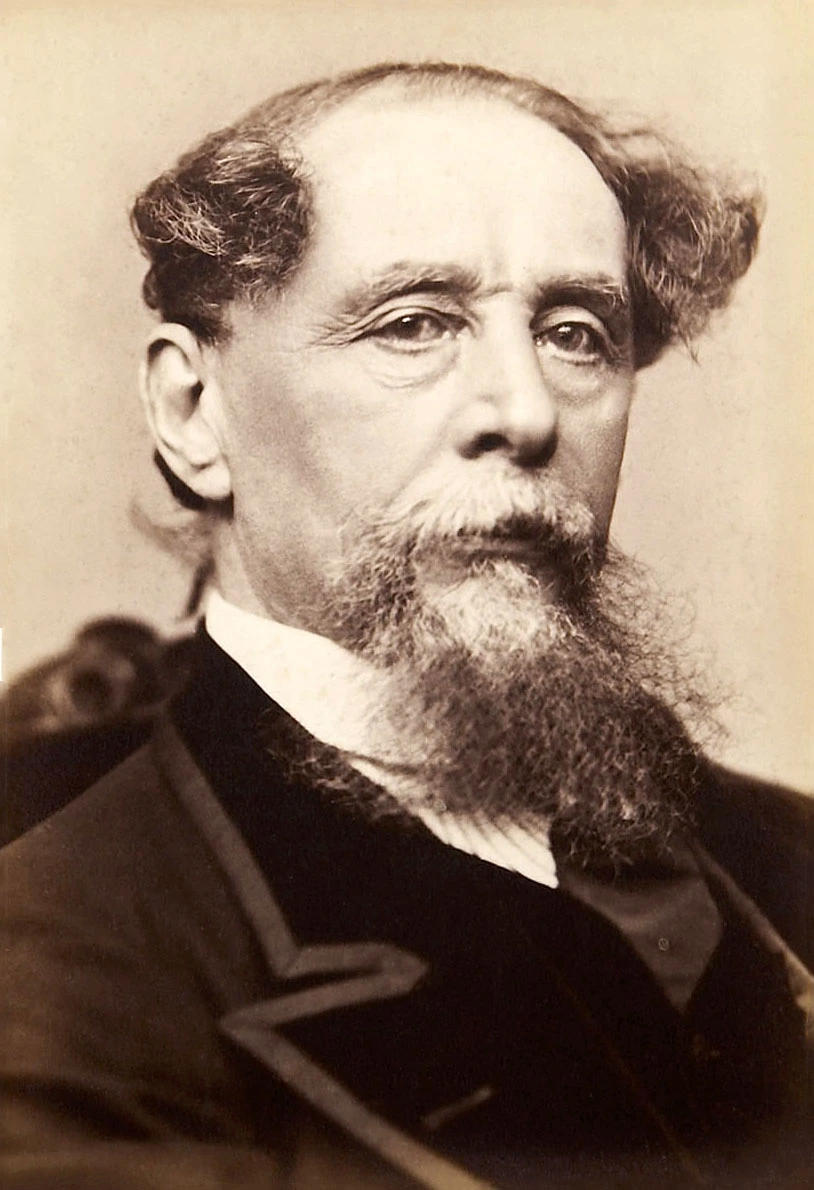
Charles Dickens's net worth at death: the bottom line

The most widely cited figure is drawn from the National Probate Calendar, which recorded Dickens's estate as 'effects under £80,000.' John Forster's biography, published in 1872-1874 and drawing on first-hand knowledge of Dickens's finances, puts the estate at 'a sum of over £80,000.' The slight discrepancy between 'under' and 'over' £80,000 reflects different reporting conventions: the Probate Calendar used a ceiling band, while Forster likely cited a more precise internal accounting. For practical purposes, £80,000 in 1870 is the number to work with. That's the estate value at the point of probate, meaning after debts, funeral costs, and testamentary expenses were accounted for.
What 'net worth' actually means for a 19th-century author
When we talk about net worth for someone alive today, we mean a snapshot: all assets minus all liabilities at a given moment. For a Victorian author who died 155 years ago, that concept needs some translation. There's no brokerage statement or bank app to screenshot. What we have instead is a probate valuation, which is a legal accounting prepared for the courts after death. It captures what the executors declared as the estate's value for the purposes of administering the will and paying any applicable duties. It's a real, legally reported number, but it reflects a moment in time and the judgment of the people doing the accounting, not a comprehensive modern balance sheet.
Dickens's estate was administered by two executors: Georgina Hogarth, his sister-in-law and housekeeper, and John Forster, his close friend and literary agent. Both were intimately familiar with his affairs, which gives the estate valuation more credibility than you'd get from a distant court appointee working from incomplete records. Even so, probate valuations of that era commonly focused on personal estate (moveable property, cash, stocks, book royalties) rather than a full asset-by-liability breakdown in the modern sense.
Where the money came from: income streams and assets

Dickens was, by Victorian standards, a wealthy man, and his wealth was almost entirely earned rather than inherited. Understanding how he built it helps make sense of what the estate included.
- Book royalties and serialisation fees: Dickens published most of his major works in serial installments, which generated both upfront payments from publishers and ongoing royalty income. By the time of his death, titles like A Tale of Two Cities, Great Expectations, and his earlier works were still generating revenue.
- Public reading tours: Dickens was a celebrated performer of his own work. His American reading tours (1867-1868 in particular) were enormously lucrative, reportedly netting him tens of thousands of pounds in a relatively short period.
- Editorial income: Dickens edited and largely funded Household Words and later All the Year Round, both popular weekly journals. These provided a steady income stream beyond his fiction.
- Property: Dickens owned Gad's Hill Place in Kent, where he died. The property had been a childhood dream of his, and he purchased it in 1856. Real estate like this would have formed part of the estate valuation.
- Personal effects and manuscripts: An auction of his personal effects took place in August 1870. Manuscript material, letters, and personal items held collector value even at the time.
In terms of valuation methodology, modern estimates for historical figures typically rely on one of three approaches: taking the probate or estate value at face value, adjusting that figure using a retail price index or earnings index to express it in today's money, or estimating lifetime income and making assumptions about savings and spending. The £7.1 million modern equivalent figure cited by sources like The Independent and the Yorkshire Post uses an RPI-style inflation adjustment on the probate value. That's the most defensible approach because it starts from a documented legal number.
What Dickens's estate likely included
Dickens's will, which has been reprinted in full by several legal and archival sources, gives a clearer picture of what was being distributed. The will directed that debts, funeral expenses, and testamentary costs be paid first from the estate before any distributions to beneficiaries. This is standard Victorian will structure, but it confirms that the £80,000 figure is a gross estate value before those deductions, or that the deductions were modest enough not to materially affect the net figure.
Among the specific bequests recorded: Georgina Hogarth received £8,000 free of legacy duty, plus personal jewellery, private papers, and specific personal items. That £8,000 bequest alone gives you a sense of the scale of the estate. Dickens also made provisions for his surviving children and other named individuals. The remainder of the estate passed under standard residuary trust arrangements, with rents and income applied to ongoing trusts.
Gad's Hill Place was sold after his death, as was much of his personal property at the August 1870 auction. These sales would have realized cash that flowed through the estate administration, but by the time probate was granted, the calendar value had already been set. The personal effects auction is worth noting for researchers: it is photographically documented, and the Charles Dickens Museum holds material related to it, including what appears to be auction-era photography from 'The Last Bid' event.
Why different websites give you different numbers
If you've searched 'Charles Dickens net worth' and seen a range of figures, you're not imagining things. Here's why the numbers vary:
| Source of discrepancy | What it affects | What to watch for |
|---|---|---|
| Inflation method used | Modern equivalent figure varies widely depending on whether RPI, CPI, earnings index, or GDP deflator is used | Sites using earnings-based inflation produce much higher modern equivalents than RPI-based ones |
| 'Under' vs 'over' £80,000 | The probate calendar uses bands; biographers cite more precise figures | Both versions refer to the same estate; treat £80,000 as the working figure |
| Gross vs net estate | Some figures quote before debts, others after | Victorian probate values typically reflect personal estate; confirm whether debts are noted separately |
| Article publication date | Inflation-adjusted figures become outdated quickly | A 2010 article's 'today's money' figure will differ from a 2026 calculation |
| Including vs excluding property | Real estate may or may not be folded into the probate personal estate figure | Gad's Hill Place adds complexity; some sources may exclude it |
| Assumptions about book royalties | Ongoing royalty income streams are hard to value at a single point | This is speculative territory; rely on the probate figure, not income projections |
The most reliable anchor is the probate record itself. When a site can trace its figure back to the National Probate Calendar or to Forster's biography, you're on solid ground. When a site offers a 'net worth' figure with no sourcing or methodology, treat it skeptically. Many wealth-listing sites extrapolate wildly from the probate number or conflate estate value with some notional lifetime earnings calculation.
How to verify these figures yourself
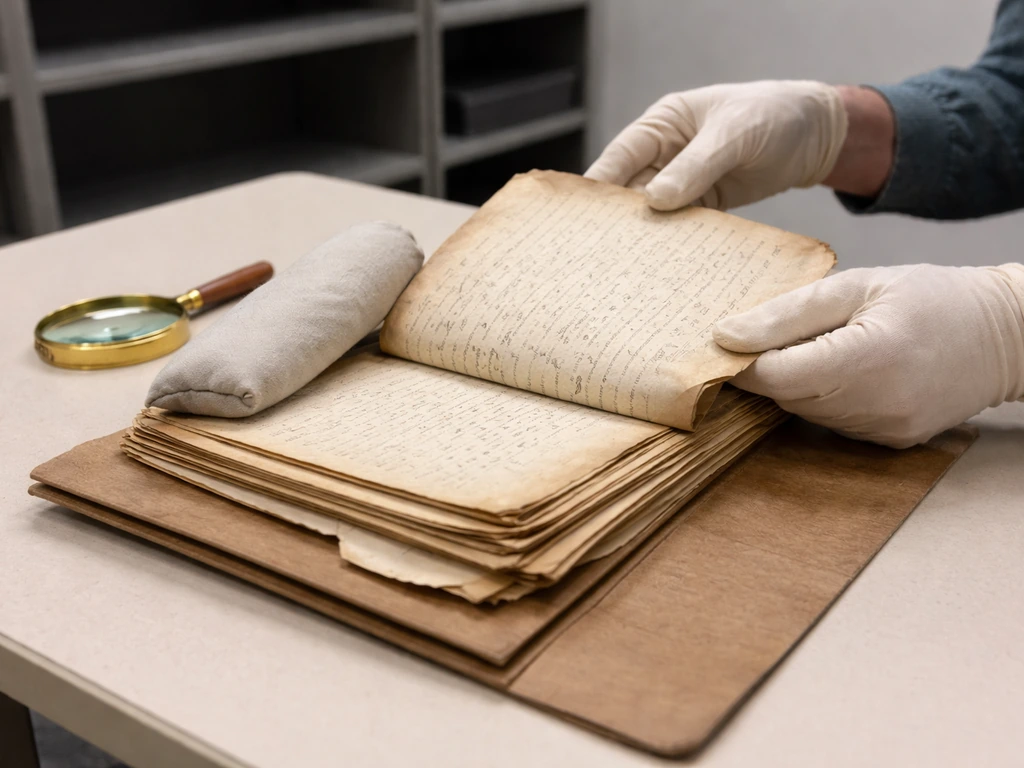
If you want to go beyond secondary sources and check the underlying evidence, here are concrete next steps: If you're trying to pin down Charles Gibson net worth, start by checking the original source and the methodology behind any valuation claims.
- Check the National Probate Calendar: The UK National Archives holds probate records, and the calendar for 1870 grants should include Dickens's estate entry. The grant date matters here, not just the death date, since records are indexed by probate grant rather than by when the person died. The National Archives guidance on death duty records (covering IR 26 and IR 27 series) explains how to navigate this.
- Look at the death duty registers: The Board of Inland Revenue death duty registers (IR 26 series) cover this period and can provide a more granular breakdown of estate composition than the summary calendar entry. These are available through the National Archives Discovery catalogue.
- Read Forster's biography: John Forster's 'The Life of Charles Dickens' (published 1872-1874) remains the closest thing to a primary financial account from someone who was actually the executor. It's on Google Books in full. The final chapters address Dickens's death and estate.
- Consult the Charles Dickens Museum: The museum in London holds archival material including items related to the 1870 auction of his effects. For researchers wanting the most granular look at what the estate physically contained, this is a direct route.
- Use the Bank of England inflation calculator: For your own inflation adjustment, the Bank of England's online tool lets you convert historical pound values to modern equivalents using multiple methodologies. Run £80,000 from 1870 yourself and you'll see the range of results depending on which index you choose.
- Check Jarndyce antiquarian booksellers: The Dickens Catalogue published by Jarndyce (referenced in ABA records) tracks primary documentary material related to Dickens, including letters and manuscripts. For researchers interested in what archival Dickens material exists and where it is curated, this is a practical starting point.
Putting Dickens's wealth in context
£80,000 in 1870 placed Dickens firmly in the upper tier of Victorian society, though not at the very apex of aristocratic or industrial wealth. For a man who was born into poverty, whose father was imprisoned for debt at Marshalsgate Prison when Dickens was twelve, and who began his working life in a blacking factory, it's a remarkable trajectory. His wealth was almost entirely self-made through writing, performing, and editing. That's a story that holds up whether you're looking at the Victorian numbers or the inflation-adjusted modern equivalent.
By comparison to other historical figures with documented estates, Dickens's £80,000 was substantial but not extraordinary for someone of his fame. It reflects a man who lived well (Gad's Hill Place was not a modest home), supported a large family, and spent heavily on his reading tours, but who also earned consistently at the top of the Victorian literary market for four decades. His American tour alone reportedly earned him around £19,000 net in 1867-1868, which gives a sense of his late-career earning power relative to the total estate.
If you're comparing Dickens to other notable historical figures from a wealth perspective, his situation shares some characteristics with later public intellectuals and performers who built their wealth through output and reputation rather than inheritance or investment. The methodology questions that apply to estimating Dickens's estate also apply to any historical figure whose financial records are incomplete, including other prominent Charles figures across history whose estates weren't documented with the same level of contemporaneous biographical attention that Forster gave to Dickens.
The most reliable references and your next steps
For a quick, defensible answer: Charles Dickens's estate was valued at approximately £80,000 at probate in 1870, equivalent to roughly £7. Searchers for Charles Gillan often see wide-ranging figures for his net worth, but those numbers typically depend on the same kind of sourcing and methodology choices Charles Dickens's estate. Because Charles Guthrie's net worth is often discussed without the same probate-level sourcing, make sure any figure you see includes a clear methodology and primary references Charles Dickens's estate. 1 million in modern purchasing power using an RPI-based inflation adjustment, though earnings-based comparisons push that figure considerably higher. The primary sources are the National Probate Calendar, John Forster's biography, and the will itself, all of which are accessible through the National Archives, Google Books, and reprints by legal and archival publishers.
If you see a dramatically different number on another site, ask two questions: what is the source, and what inflation method did they use? If neither is answered, the figure is probably not worth relying on. The probate value is the bedrock. If you're also researching Charles t Munger Jr net worth, look for clearly stated sources and a defined method the way you would here for Dickens. Everything else, including modern equivalents and comparisons to contemporary wealth levels, is interpretation built on top of that documented foundation.
FAQ
Why do some websites claim different “Charles Dickens net worth” amounts if they are looking at the same death data?
No. The probate figure reflects the value declared for estate administration, typically dominated by personal estate (cash, moveables, investments, and certain rights such as book-related income that were accounted for), not a comprehensive “assets minus liabilities” balance sheet in the modern accounting sense.
How can I tell whether a Charles Dickens net worth number is based on probate records or a guess?
Look for whether the site uses (1) the probate value directly, (2) an inflation adjustment with a stated index type, or (3) an earnings-savings model. If they provide a single number with no disclosed method or index choice, it is usually a reconstruction rather than a sourced valuation.
What does the “effects under/over £80,000” wording actually mean?
Because probate “effects” are usually an accounting category rather than a branded, modern net-worth statement. For example, a reported “under” vs “over” band can reflect how the probate calendar grouped estates, and small differences can arise from whether the figure is presented before or after particular administration deductions.
Does the £80,000 figure represent what Dickens’s beneficiaries received, or a gross estate amount?
Yes, it can. Even with a gross estate number around £80,000, deductions for funeral costs, debts, and testamentary expenses reduce what was distributable. However, in Dickens’s case the available description of the will suggests the deductions were not large enough to overturn the broad magnitude of the figure you see quoted.
Should I use purchasing-power inflation or earnings-based inflation when converting Dickens’s estate to today’s money?
Prefer the probate anchor and then check the inflation method. RPI-style adjustments are common for “purchasing power today,” while earnings-based conversions can yield a larger “economic weight” figure. A site that mixes approaches without saying so is likely to produce misleading comparisons.
How do the will instructions affect the way net worth gets reported after Dickens’s death?
The will directs payment of debts, funeral expenses, and testamentary costs before distributions, but it does not mean every component of wealth was liquid at death. Some property and rights were likely converted to cash through administration steps, including sales, and those conversion paths can affect how later writers describe “net worth.”
Why do earnings-based estimates sometimes make Dickens look much richer than the probate-based number?
Not directly, unless the source explains how it treats ongoing income and rights. Probate values are about what is included in the estate valuation for administration, so a lifetime-income model can overstate “net worth” if it counts earnings that were never retained as assets or already spent during life.
Was Dickens’s estate at death unusually high compared with other famous Victorian figures?
It depends on what “wealth” comparison you mean. Dickens’s estate was substantial for the Victorian period, but he was not aristocracy-level. If you want comparability, compare like with like (documented estates converted with the same method) and treat cross-period comparisons as approximate because wealth measurement standards differ.
If I find two different “net worth” numbers that both cite probate, why might they still disagree?
Probably not in the way you might expect. Many modern “net worth” pages treat probate as a starting point but then apply assumptions about investments, spending rate, and savings that are not recoverable from probate alone. That is why two sites using the same probate number can still diverge materially.
Can probate tell me Dickens’s net worth during his life, not just at death?
Because the “net worth at death” snapshot is only one layer. If you are estimating what he was worth while living, you would need additional contemporaneous indicators such as contract values, payment timing, and known expenditures, and those are typically less complete than the probate record.