
Charles Alderton, the pharmacist who invented Dr Pepper in Waco, Texas around 1885, died in 1941 and left no publicly documented estate. He earned a modest pharmacist's salary during his lifetime and never personally profited from the commercial success of the drink he created. As a historical figure with no traceable modern assets, investments, or heirs in the public record, his net worth at the time of death is estimated to have been minimal, likely in the range of a few thousand dollars in 1941 value (roughly $50,000 to $80,000 in 2026 dollars when adjusted for inflation), and that figure is based almost entirely on inference rather than confirmed records.
Charles Alderton Net Worth: Estimate, Sources, and How It’s Calculated

Derek Mansfield
14 Jun 2026

First, which Charles Alderton are we talking about?
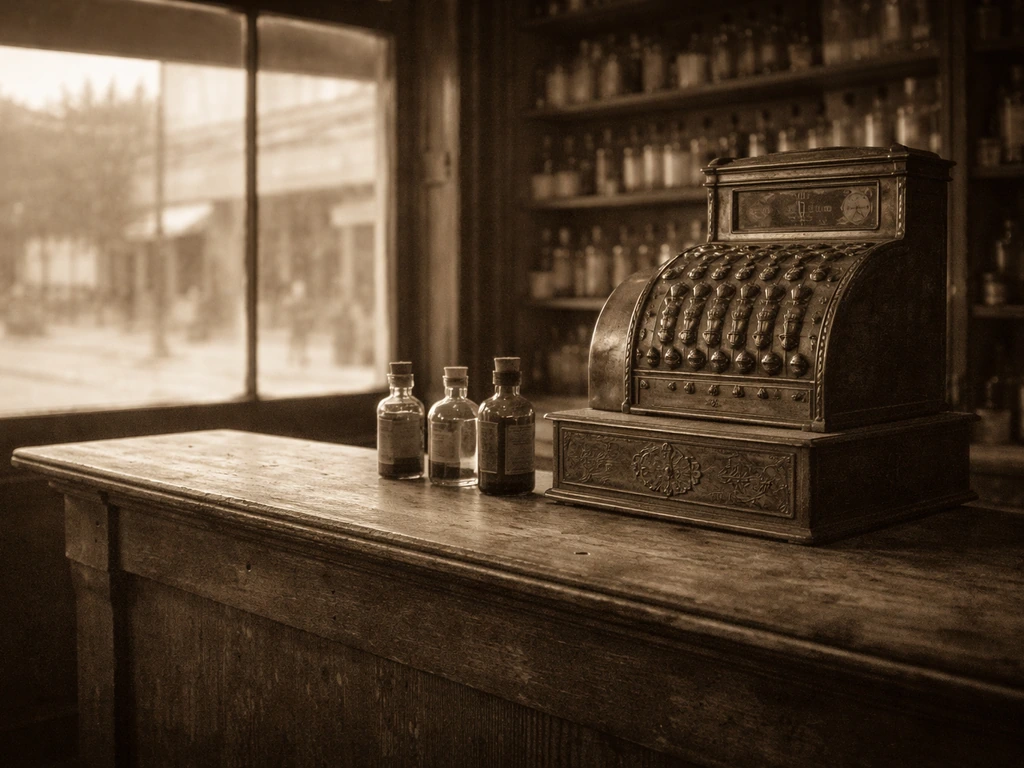
When people search for "Charles Alderton net worth," they almost always land on one person: blank" rel="noopener noreferrer">Charles Courtice Alderton, born June 21, 1857, in Brooklyn, New York, and died May 29, 1941. He is the American pharmacist credited with inventing Dr Pepper while working at Morrison's Old Corner Drug Store in Waco, Texas, starting in 1885. That's the Charles Alderton the internet talks about, and that's who this article covers.
That said, "Alderton" is a real surname with multiple bearers, and it's worth flagging that other individuals named Charles Alderton do appear in public records, though none carry the same level of name recognition or documented financial history. If you were searching for a living professional, entrepreneur, or public figure by that name, the search results won't clearly separate them, and the financial picture would be entirely different. For the purposes of this article, and consistent with what virtually every major search result returns, we're focused on the Dr Pepper inventor.
The net worth estimate and what it's actually based on
There is no confirmed, documented net worth figure for Charles Alderton. None. What we can do is construct a reasonable historical estimate based on what we know about his career, profession, and era. Alderton worked as a pharmacist, a respectable but not wealthy profession in late 19th- and early 20th-century America. He spent years working for Wade Morrison at the Old Corner Drug Store, presumably on a pharmacist's wage. There is no documented evidence that he received royalties, ownership stakes, or any financial compensation tied to the commercial development of Dr Pepper.
Morrison and later the Artesian Manufacturing and Bottling Company (which became the Dr Pepper Company) commercialized the drink. Alderton is widely reported to have shown little commercial interest in pursuing the invention himself. That uncertainty is why estimates for Charles Aidman net worth should be treated with caution unless reliable sourcing appears little commercial interest. That's a crucial detail for any net worth estimate: the man who invented one of the best-selling soft drinks in history appears to have seen almost none of the commercial wealth it eventually generated.
Given his professional background and historical context, a reasonable estimate for his accumulated wealth at death in 1941 falls somewhere between $5,000 and $15,000 in nominal 1941 dollars. Adjusted to 2026 dollars using standard CPI inflation calculators, that range translates to roughly $50,000 to $150,000. These are inferred figures, not confirmed ones. Treat them as a ballpark grounded in profession and era, not a hard data point.
Career and income streams: what he had and what he missed
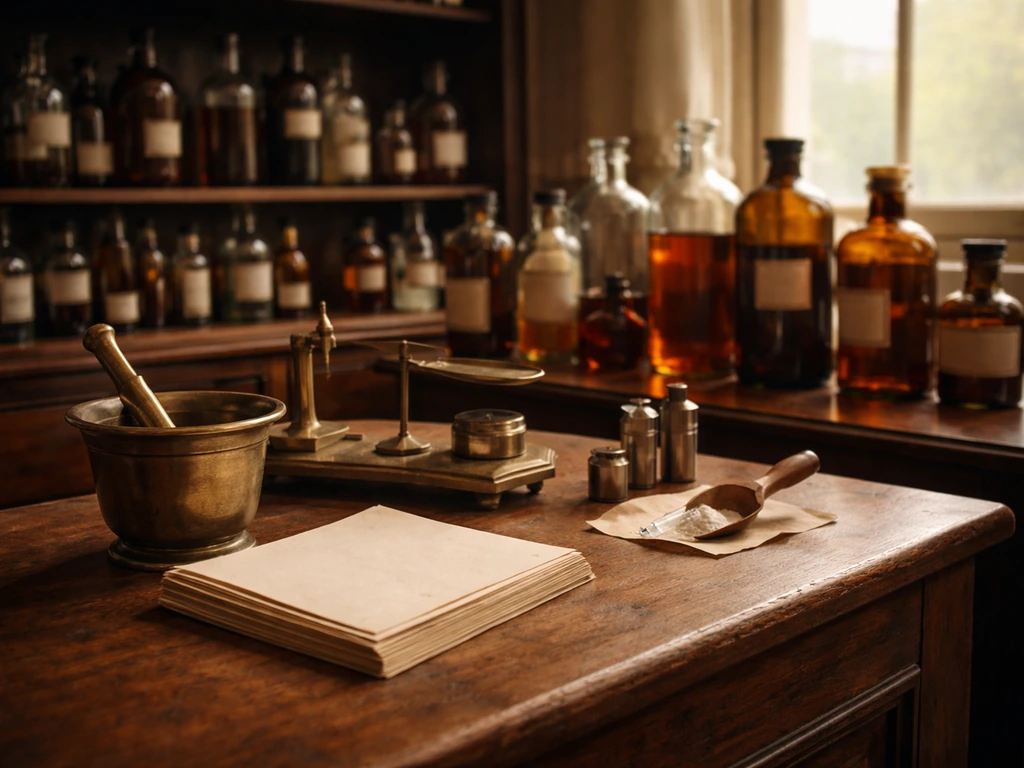
Alderton's primary income stream throughout his life was pharmacy work. He trained as a pharmacist, moved to Waco, and took up employment at Morrison's Old Corner Drug Store around 1885. Pharmacists in that era earned a livable but far from wealthy income, typically in the range of $500 to $1,500 annually in the late 1800s, depending on location and employer. There is no evidence Alderton owned his own pharmacy, which would have been the clearest path to building significant wealth in that profession.
The Dr Pepper story is the obvious elephant in the room. Alderton is credited with experimenting with fruit syrup combinations at the soda fountain and landing on the formula that became Dr Pepper. But he reportedly gave the recipe to Morrison, who then commercialized it. There's no documented royalty agreement, no partnership stake, and no recorded payment beyond his employment. Contrast that with the Dr Pepper brand's eventual worth: the company was acquired by Keurig in 2018 for approximately $18.7 billion. Alderton's share of that? Effectively zero, at least in any traceable financial sense.
There are no recorded business ventures, investments, patents in his name that generated ongoing income, or other notable financial activities in the public record. His income story is essentially that of a skilled working professional in a mid-sized Texas city during the Gilded Age and Progressive Era.
Assets, investments, and liabilities: what can be inferred vs. confirmed
With a historical figure like Alderton, the honest answer is that very little can be confirmed and almost everything is inferred. He lived in Waco, Texas for most of his adult life, which suggests he likely owned or rented residential property there. Property ownership in Waco in the early 20th century was affordable by national standards, so any real estate holdings would have been modest in value. No specific property records have surfaced in publicly available sources to confirm what he owned at death.
In terms of investments, there is no record of stock holdings, business partnerships, or financial instruments in his name. Life insurance policies were common among middle-class Americans of his era, so it's plausible he held one, but that's an inference, not a fact. On the liabilities side, again, nothing is documented. A typical pharmacist of that era might carry a small mortgage or no debt at all if they rented.
| Category | Status | Estimated Value (2026 dollars) |
|---|---|---|
| Salary/wages from pharmacy work | Inferred from profession and era | Modest lifetime earnings, not wealth-building |
| Dr Pepper royalties or ownership | No evidence of any | $0 |
| Real estate (Waco, TX) | Plausible but unconfirmed | $30,000 to $80,000 equivalent |
| Business investments | No evidence found | $0 to unknown |
| Life insurance / savings | Plausible inference | Small amount, unconfirmed |
| Liabilities (debt) | No records found | Likely minimal to none |
How net worth estimates like this one are built (and why numbers vary)
Net worth estimates for living public figures typically draw on a combination of reported salaries, known business equity, real estate filings, SEC disclosures, and media interviews. For a historical figure like Alderton, none of those tools are available. Instead, estimators work from profession-based income proxies (what did pharmacists earn in 1885 Texas?), historical property records if they exist, probate filings if accessible, and contextual comparisons to peers in similar roles.
This is why you'll see wildly different figures for historical figures across different websites. Some sites apply a speculative formula or pull a number from another site without sourcing it. Others acknowledge the uncertainty clearly. The range I've cited here, $50,000 to $150,000 in 2026 dollars, is deliberately conservative and explicitly labeled as inferred. If you see a site claiming Alderton was worth millions, treat that with serious skepticism. His documented career simply doesn't support it. For more context, see the Charles Alderton net worth estimate and how it compares to other sources.
It's also worth noting that for other Charles figures tracked on this site, such as Charles Alden Black or Charles Addams, the estimation methods are more robust because those individuals lived closer to the modern era with more documented financial trails. For Charles Addams, net worth estimates may be easier to triangulate because more of his life and finances are documented than for historical figures like Alderton. Charles Alden Black net worth, by contrast, is easier to estimate because his financial trail is more documented through modern records. Historical figures like Alderton represent a harder case where intellectual honesty requires wider ranges and more caveats.
Transparency checklist: how to validate this estimate yourself

If you want to do your own digging, here are the most productive places to look and what to realistically expect from each:
- Probate records (McLennan County, Texas): Alderton died in 1941 in Waco. His estate, if he had one of meaningful size, would have gone through McLennan County probate court. The Texas State Archives and local county clerks sometimes hold digitized or microfilmed probate records from that era. This is the single best source for confirming actual estate value.
- Census records (1900, 1910, 1920, 1930): Available via Ancestry.com and FamilySearch. These can confirm his occupation, household, property ownership status, and general economic standing decade by decade.
- Waco city directories (late 1800s to 1940s): These historical directories often list occupations and business affiliations, which can help confirm whether Alderton held any commercial interests beyond his employment.
- Texas property tax records: Historical property tax rolls can show real estate ownership. The Texas General Land Office and county appraisal districts sometimes have archives going back this far.
- Patent records via USPTO: A search for patents under "Charles Alderton" or "C.C. Alderton" would confirm or rule out any intellectual property he held. A quick USPTO search currently returns no beverage patents in his name.
- Newspaper archives (Waco Tribune-Herald, Brooklyn Eagle): Newspaper databases like Chronicling America (Library of Congress) and Newspapers.com occasionally carry obituaries and estate notices that mention financial details.
What to track going forward
Because Alderton is a historical figure, his "net worth" won't change. But the quality and completeness of estimates around him can improve as more records get digitized. Texas county records digitization projects are ongoing, and probate documents from the 1940s are gradually becoming more accessible online. If McLennan County probate records from 1941 become searchable, that would be the single most valuable update to this estimate.
Beyond the records side, watch for new biographical or historical scholarship on Dr Pepper's origins. Academic work or investigative journalism occasionally surfaces financial details, such as whether Alderton received any deferred compensation or informal payments from Morrison, that don't appear in standard reference sources. Any such findings would meaningfully shift the picture.
Finally, if you landed here because you're researching a living person named Charles Alderton, that individual's financial profile would require an entirely different approach: checking LinkedIn for professional affiliations, Companies House or SEC filings depending on country, and recent media coverage. The pharmacist and the modern professional are very different research projects, and it's worth making sure you're tracking the right one.
FAQ
Why do some websites claim Charles Alderton net worth is in the millions?
Most million-dollar claims come from unsourced guesswork or misattribution. They often treat “invented Dr Pepper” as if it meant he held equity or royalties, but the public record described here shows no documented royalty agreement, partnership stake, or investment trail. If a source cannot point to probate records, property ownership, or a specific compensation arrangement, treat the number as unreliable.
Could Charles Alderton have received royalties or a hidden payout from Morrison or the bottling company?
It is possible but unverified. The article notes there is no documented royalty or partnership evidence, so the only way to move from “inference” to “fact” would be finding contemporaneous agreements, accounting notes, or probate disclosures that reference deferred compensation. Until such records surface, estimates should stay anchored to his pharmacist income and likely modest assets.
Does his “net worth at death” depend heavily on whether he owned a home or rental property in Waco?
Yes, but the effect is bounded by how much is actually documented. The article explains that he likely owned or rented, yet no specific property records have surfaced publicly. If probate or tax assessment records later confirm property ownership, the estimate can shift, but given typical affordability at the time, a dramatic jump to “very wealthy” would still require additional evidence like business equity or substantial land holdings.
How should I adjust the inflation numbers, and what’s the biggest risk in the calculation?
The biggest risk is assuming the same income or asset value multipliers used for modern net worth comparisons also apply to small historical estates. The article’s range uses CPI-style inflation as an approximation, but it still depends on the initial nominal-dollar assumption (for example, how much cash or property was actually in the estate). If later probate documents revise the nominal estate value, the inflation-adjusted figure must be recalculated.
What probate or county records would matter most if they become available?
The most valuable would be McLennan County probate files from 1941 (or the relevant Texas jurisdiction), especially an inventory of assets and debts, executor reports, or distribution summaries. Those documents can reveal real estate holdings, cash amounts, life insurance proceeds, and whether there were unpaid claims that reduce gross assets.
Is it safe to use “Charles Aidman net worth” as a synonym for “Charles Alderton net worth”?
No. That appears to be a mismatch or typo in the article’s text and could lead to incorrect results when searching. If you are researching the Dr Pepper pharmacist, use “Charles Courtice Alderton” plus “Waco,” “Old Corner Drug Store,” or “Dr Pepper” to reduce the chance of pulling data from a different individual with a similar name.
If there were no documented investments or patents, why would anyone still get a wide net worth range?
Because the unknowns are largely around assets that might not be mentioned in simple biographies, such as small business interests, household value, or life insurance. The article notes those items are plausible but not confirmed. When cash and property amounts are uncertain and probate records are missing, it is normal for credible estimates to widen while still staying far below claims of major wealth.
Could there be another Charles Alderton with a different financial history that I should be looking at?
Yes, the article warns that other people with the same surname and given name exist in public records. If your goal is a living professional, entrepreneur, or modern figure, you should verify identity before using any “net worth” figure, because the research method and financial trail for a modern person would be completely different from a 19th-century pharmacist.