
The most credible estimate for Charlemagne Tha God's net worth as of 2026 sits around $10 million, based on figures commonly cited by Celebrity Net Worth and similar aggregators. However, that number is almost certainly low if you factor in the reported $200 million iHeartMedia contract extension covered by both Forbes and TMZ in December 2025, plus his equity stake in the Black Effect Podcast Network.
Charlemagne Breakfast Club Net Worth: How It’s Calculated

Derek Mansfield
27 Mar 2026
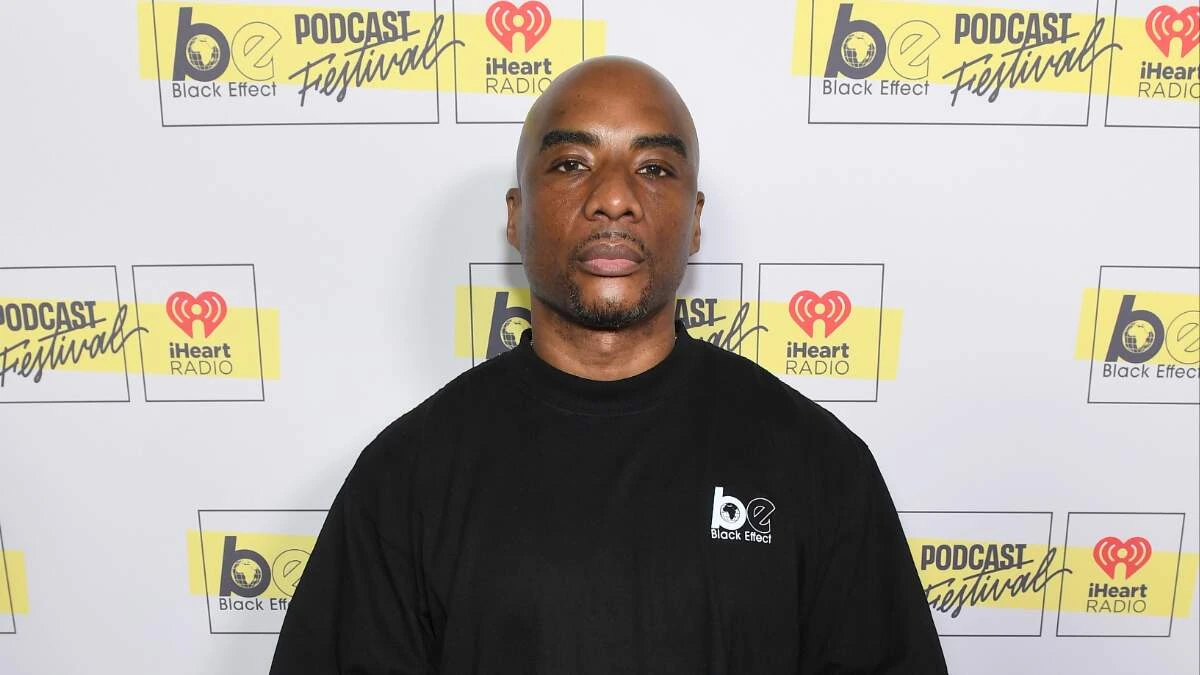
The honest answer is that no publicly verified figure exists, and the range of plausible estimates runs from roughly $10 million to significantly higher depending on how you account for deal structures, equity, and business income. This guide walks you through how to think about that range and find the most defensible number yourself. If you want the related angle on the same question, see dan charney net worth for how other public figures are estimated.
Who Charlemagne Tha God is and why people search his net worth
Charlemagne Tha God (born Lenard Larry McKelvey) is a co-host of The Breakfast Club, the nationally syndicated morning show on Power 105.1 (WWPR-FM) in New York, distributed by iHeartMedia. The show launched its first episode on December 6, 2010, and Charlemagne has been a fixture of it ever since. The current host roster includes Charlemagne, DJ Envy, Jess Hilarious, and Loren LoRosa. Angela Yee was a co-host for many years before departing, and Jess Hilarious officially joined as her permanent replacement.
The reason "Charlemagne Breakfast Club net worth" gets searched so often is simple: The Breakfast Club is the highest-profile thing most people associate with him, and morning radio hosts at syndicated national shows are perceived as high earners. But Charlemagne's financial story goes well beyond a radio salary. He has built a media empire around the Breakfast Club brand and his own name, which is exactly why net-worth estimates vary so wildly across sites.
One thing to clear up immediately: when you search this keyword, you are looking for Charlemagne's personal net worth, not the show's corporate value or iHeartMedia's revenue. Those are completely different numbers, and conflating them is a common mistake on lower-quality net-worth sites.
Why the numbers online are all over the place
The short version: nobody publicly files a personal financial statement. Every number you see online is an estimate built from publicly available information, and different sites use different assumptions and methodologies. Celebrity Net Worth, one of the most-cited sources, openly states in its disclaimer that it compiles data from multiple sources and that figures are not based on audited filings. Wikipedia's entry on the site specifically notes that the New York Times has criticized it for accuracy problems. That is not a reason to dismiss the site entirely, but it is a reason to treat any single figure as a starting point rather than a verified fact.
Forbes uses a more rigorous methodology for its wealthiest-people lists, relying on revenue proxies, valuation multiples, liquidity discounts, and comparable transactions. But even Forbes acknowledges that its figures are modeling exercises, not audited balance sheets. For someone like Charlemagne, who has private business arrangements and undisclosed equity stakes, the gap between what is provable and what is estimated can be enormous.
The other major source of confusion is that deal value does not equal personal net worth. When Forbes and TMZ both reported on a $200 million iHeartMedia deal in late 2025, that number refers to the total contract value, which can span multiple years, involve production budgets, include non-guaranteed components, and be split across multiple parties. Charlemagne's take-home from that deal, after taxes, production costs, and any revenue sharing, is not $200 million. But many net-worth calculators will see that headline and adjust their estimates upward without doing that math.
Where Charlemagne's money actually comes from
To build a credible estimate, you need to map out his actual income streams. Here is what is publicly documented or reasonably inferred from his media footprint as of early 2026.
Radio salary from The Breakfast Club
His base income for most of his career has come from his co-host role on The Breakfast Club. Nationally syndicated morning radio hosts at top-market stations typically earn anywhere from a few hundred thousand to a few million dollars annually depending on ratings, tenure, and negotiating leverage. Charlemagne has been on the show since its launch in 2010, giving him strong leverage. His exact salary is not public, but it is reasonable to assume it is at the high end of that range given the show's profile.
The Black Effect Podcast Network
This is where things get more interesting for net worth purposes. On September 9, 2020, Charlemagne and iHeartMedia officially launched the Black Effect Podcast Network as a joint venture. Wikipedia summarizes Charlamagne Tha God’s role in launching the Black Effect Podcast Network as a partnership with iHeartMedia in 2020 [Black Effect Podcast Network as a joint venture](https://en. wikipedia.
org/wiki/CharlamagnethaGod). The network has grown significantly: The Breakfast Club podcast within the Black Effect ecosystem has surpassed one billion downloads, a milestone reported by iHeartMedia. Charlemagne also hosts The Brilliant Idiots as part of his podcasting work. As a co-founder of the network, he holds an equity stake that is separate from any salary, and it is this ownership interest that makes the $10 million floor estimate feel potentially conservative.
The Black Effect Podcast Festival, which returns to Atlanta in 2026, is a live extension of the network brand and represents additional revenue streams through ticketing, sponsorships, and partnerships. This kind of brand-extension business is exactly what gets undervalued by simple net-worth calculators.
TV appearances, production, and speaking

Charlemagne has appeared on and contributed to television projects over the years, adding income from appearance fees and potentially back-end production deals. Public speaking at events is another line item for media personalities at his level, typically generating five-figure fees per engagement.
Books and media appearances
He has authored books, which generate advances, royalties, and ancillary income through speaking engagements that accompany a book release. Book deals at his profile level can range from six to seven figures in advances, though ongoing royalties depend on sales performance.
Brand endorsements and sponsorships
As a prominent media personality with a large social audience and a nationally syndicated platform, Charlemagne is an attractive partner for brand deals. These can range from in-show advertising integrations (which iHeartMedia would partly control) to direct personal endorsement arrangements. Exact figures are almost never disclosed publicly.
Business deals and investments worth tracking
The iHeartMedia relationship is the most significant documented business activity. The $200 million contract extension reported in December 2025 by Forbes and TMZ is a major anchor for any updated net-worth estimate. But again, that is total contract value, not a check written to Charlemagne. To understand what portion is his, you would need to know the contract term length, what deliverables are included, how production costs are handled, and whether any portion is equity-based.
The Black Effect Podcast Network joint venture is the second major anchor. In a joint venture with iHeartMedia, the equity split is typically not disclosed publicly, but Charlemagne's co-founder status means he has an ownership interest in a network that, at one billion downloads, is generating meaningful advertising revenue. If you apply a standard podcast advertising revenue model (CPM rates for premium podcast networks typically run $25 to $50 per thousand downloads for mid-roll ads), one billion downloads implies tens of millions of dollars in gross advertising revenue over the network's lifetime, a portion of which would flow to Charlemagne as an equity holder.
For verifiable business records, the best places to look are: iHeartMedia press releases (which document launch dates, milestones, and partnership structures), Forbes reporting on the deal (which provides narrative context even if it cannot verify exact figures), and any public business entity filings under his name or the Black Effect brand in states where he operates. Court records and SEC filings would only be relevant if iHeartMedia or a related entity were publicly traded and had disclosed specific partnership terms.
Charlemagne vs. his Breakfast Club co-hosts

Because the search keyword ties "Charlemagne" to "Breakfast Club," it is worth quickly comparing him to his co-hosts so you do not mix up individual estimates with a group or show-level figure.
| Host | Role on Show | Commonly Cited Net Worth Estimate | Key Income Drivers |
|---|---|---|---|
| Charlemagne Tha God | Co-host since launch (2010) | $10M+ (likely higher given iHeart deal) | Radio, Black Effect Podcast Network, books, brand deals |
| DJ Envy | Co-host since launch (2010) | Estimates vary; Celebrity Net Worth has a dedicated page | Radio, real estate (widely discussed), DJing |
| Jess Hilarious | Co-host (joined after Angela Yee's departure) | Lower estimates given shorter tenure | Radio, social media, acting/comedy |
| Angela Yee (former) | Co-host until departure | Estimates widely published online | Radio, business ventures, brand deals |
The key takeaway from this comparison is that each person on that show has their own separate wealth profile. Charlemagne's role as a radio host is just one piece of his financial picture, and the same is true for his co-hosts. DJ Envy, for example, is widely known for real estate activity that is largely separate from his radio income. Do not assume any single co-host's net worth reflects the show's combined value or vice versa.
How to verify claims and avoid bad net-worth sites
The fastest way to spot an unreliable net-worth claim is to check whether the site links to any source for its number. If it just states a figure with no methodology or reference, treat it as a guess. Celebrity Net Worth is the most commonly cited site in this space, and while it is not worthless, its own disclaimer confirms figures are not verified. A New York Times critique noted accuracy problems, and Wikipedia documents this criticism.
- Look for sites that cite specific sources (Forbes reporting, iHeartMedia press releases, court filings, or interviews where the subject discusses earnings directly).
- Treat any figure from a site that republishes Celebrity Net Worth numbers without adding new analysis as a secondary estimate, not an independent source.
- Be especially skeptical of sites that show oddly round numbers (exactly $10M, $15M, $20M) with no range or uncertainty noted.
- Watch for sites that conflate deal value with personal wealth. A $200M contract does not make someone worth $200M.
- Avoid any site that asks for personal information or payment to reveal a 'real' net worth figure. These are scams.
For primary-source verification, go directly to iHeartMedia press releases for business partnership details, Forbes and TMZ for deal reporting, and official Power 105.1 or iHeart show pages for role confirmation. If Charlemagne has discussed his finances in interviews (he has touched on this subject publicly), those quotes are far more reliable than any third-party estimate. A broader look at Charlamagne tha God's net worth across different sources can help you triangulate a more reliable range.
Build your own estimate in a few steps
You do not need to be a financial analyst to build a defensible personal estimate. Here is a practical checklist you can work through right now.
- Start with the radio salary anchor: Research what nationally syndicated morning show co-hosts at major-market stations earn. Estimates from industry trade press suggest the range is roughly $500K to $3M+ annually for top-tier talent. Use this as your base income assumption.
- Add the podcast network equity: Look up the Black Effect Podcast Network launch press release (September 9, 2020) and any available reporting on its growth. Use the one billion downloads milestone as a scale indicator, then apply a conservative podcast revenue model to estimate total network revenue. Assume Charlemagne retains some equity share (exact percentage unknown, but co-founder status is documented).
- Factor in the iHeartMedia contract: The $200M figure reported in December 2025 covers a multi-year deal. Divide by a reasonable contract term (say, 5 years), subtract a conservative estimate for production costs and iHeart's revenue share, and apply a tax estimate. This gives you a plausible annual net income range from the contract.
- Add book and speaking income: If he has published books (which he has), advance and royalty income over a career at his level could reasonably add $1M to $5M cumulatively. Speaking fees at a few engagements per year at $50K to $100K per event add another layer.
- Subtract taxes and expenses: Federal and state income taxes for a high earner in New York can run 40 to 50 percent of gross income. Business expenses, staff, and production costs reduce net income further.
- Arrive at a range, not a single number: Given the above, a defensible personal estimate for Charlemagne's net worth in early 2026 sits somewhere between $15M and $40M+, with the higher end possible if his Black Effect equity is valued generously or if the iHeart deal structure is favorable. The commonly cited $10M figure is likely a floor, not a ceiling.
- Sanity-check against lifestyle indicators: Public reporting on real estate purchases, business expansions, or other asset disclosures can help you calibrate whether your estimate is in the right neighborhood.
The honest conclusion is that you will not find a single verified number for Charlemagne Tha God's net worth because none has been publicly disclosed. Charlemagne net worth estimates are widely discussed online, but the most defensible approach is to build your own range from documented income anchors.
What you can do is build a range using documented income anchors, apply reasonable assumptions, and arrive at an estimate that is more defensible than anything a simple aggregator site will give you. The $10M floor is widely cited. The $200M iHeartMedia deal suggests his earning power is significantly higher than that floor implies.
The most honest answer today is: probably somewhere between $15M and $40M or more, with meaningful uncertainty on the upside due to his equity stake in the Black Effect Podcast Network and his iHeart media deals.
FAQ
Is the “$200 million iHeartMedia deal” the same as Charlemagne Tha God’s net worth?
No. That headline figure is the contract value, it can cover multiple years, production and fulfillment costs, and components that do not convert to cash profit. A better approach is to estimate Charlemagne’s share using deal term length, deliverables, and whether any portion is equity or revenue-sharing.
Why do net worth sites give numbers that are both too low and too high?
Most differ on (1) how much of the contract value is treated as personal income, (2) whether the model includes equity value from the Black Effect Podcast Network, and (3) whether they assume persistent podcast advertising revenue versus one-time or variable payouts. If a site does not show assumptions, treat the number as a guess.
How can I tell if an estimate is mixing up show value with a personal net-worth figure?
Look for language like “the show is worth” or “the network earns,” then see whether the site clarifies it is converting revenue or valuation into personal net worth. For net worth, you want personal equity, retained profits, and liquidity, not total business revenue.
What’s the most common mistake people make when estimating podcast-related wealth?
Assuming one billion downloads equals one billion dollars. Downloads are a demand metric, the money depends on ad load, completion rates, CPM, geography, and whether ads are sold at the network level or shared with creators. A realistic model uses ad impressions and expected fill rates, not raw downloads.
Does Charlemagne’s position as a co-founder automatically mean his net worth is extremely high?
Not necessarily. Co-founder status can mean anything from a minority equity stake to a larger ownership position with different vesting schedules. Without publicly disclosed percentages, the equity portion is uncertain, and that uncertainty drives the widest part of the range.
Should I use “net worth” or “annual income” to evaluate his wealth?
They measure different things. Annual income can be high even if net worth grows slowly due to taxes, business expenses, and reinvestment. Net worth reflects accumulated assets and equity value, so a high-earning year from a contract does not instantly translate to a proportional net worth jump.
Do taxes and business costs significantly change what a big contract headline means?
Yes. Net worth estimates often over-focus on gross contract value. Real take-home can be reduced by income taxes, agent and management fees, production costs handled by the creator or partner, and revenue splits. When comparing models, favor estimates that explicitly account for these deductions.
Are there any “public records” that could narrow the net worth range?
Potentially. If Charlemagne or the Black Effect entity appears in state business filings, you can verify ownership roles and the existence of separate companies. However, these records usually do not disclose personal net worth, so they help with confirming structure, not valuing total assets.
How should I interpret “book deals” when estimating net worth?
Book-related numbers are often misread because advances are not the same as lifetime royalties and marketing costs can be substantial. A defensible estimate separates a possible advance range from ongoing royalties, then factors whether royalties are assigned to an imprint or shared through publishing contracts.
Does public speaking always add meaningful wealth for radio personalities?
It can, but it varies widely by demand and representation. Many media personalities earn five-figure fees per engagement, yet how that translates into net worth depends on frequency, travel and staffing costs, and how much is paid to agents or event organizers. Sporadic appearances create smaller long-term impact than recurring endorsements or ownership income.